Asian Sesame Noodle Salad with Ginger Peanut Dressing
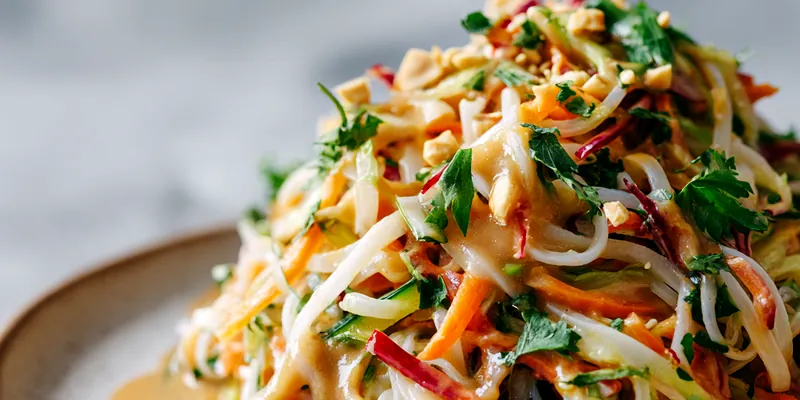
This vibrant Asian sesame noodle salad combines tender noodles with crisp, colorful vegetables in a savory ginger peanut dressing. It's the perfect make-ahead dish that gets better as it sits, making it ideal for meal prep or potluck gatherings. The combination of sesame oil, rice vinegar, and fresh ginger creates an authentic Asian flavor profile that's both refreshing and satisfying.

Why This Asian Noodle Salad Works
The secret to an exceptional noodle salad lies in the balance of textures and temperatures. By cooling the noodles completely before adding vegetables, you prevent the delicate vegetables from wilting while ensuring the noodles absorb the dressing properly. The combination of soft noodles, crisp raw vegetables, and crunchy peanuts creates a multi-dimensional eating experience that keeps every bite interesting. This technique is commonly used in authentic Asian noodle dishes where texture contrast is just as important as flavor.
The ginger peanut dressing brings together the essential elements of Asian flavor profiles: umami from soy sauce, sweetness from honey, acidity from rice vinegar, and richness from sesame oil and peanut butter. Fresh ginger adds a bright, spicy note that elevates the entire dish beyond typical Western interpretations. This sauce emulsifies beautifully and coats each noodle strand evenly, ensuring consistent flavor distribution throughout the salad.
💡 Professional Tip
For the best texture, rinse your cooked noodles under cold water for at least 30 seconds while gently separating them with your hands. This removes excess starch that can make noodles gummy and stops the cooking process immediately, preventing overcooking.
Frequently Asked Questions
Yes, this salad is perfect for meal prep! You can prepare all components up to 24 hours in advance. Store the cooked noodles, cut vegetables, and dressing in separate airtight containers in the refrigerator. Combine them 2-4 hours before serving for best results. If making more than 4 hours ahead, add the dressing just before serving to maintain optimal texture. The salad stays fresh for up to 3 days when stored properly, though the vegetables will lose some crispness after day two.
For nut-free versions, substitute tahini (sesame seed paste) or sunflower seed butter in equal amounts. Both provide similar creaminess and richness to the dressing. Tahini gives a more authentic Asian flavor profile, while sunflower seed butter offers a milder taste. You can also use almond butter or cashew butter if tree nuts are acceptable. Adjust the consistency with a bit more rice vinegar or water as needed, since different nut and seed butters have varying thicknesses.
Rice noodles are the most traditional choice and remain tender without becoming mushy when dressed. However, this recipe is versatile and works beautifully with linguine, spaghetti, soba noodles, or even whole wheat pasta. Rice vermicelli creates a lighter, more delicate salad, while thicker noodles like linguine provide a heartier texture. Whatever you choose, cook the noodles to al dente and rinse thoroughly in cold water to prevent them from sticking together.
Absolutely! This noodle salad pairs wonderfully with grilled chicken breast, seared tofu, cooked shrimp, or edamame. For chicken or tofu, slice it thinly and marinate in a bit of the dressing before cooking. Shrimp can be tossed in while still warm. For vegetarian protein, add 1 cup of shelled edamame or cubed baked tofu. You can also top with a soft-boiled egg sliced in half for added richness and visual appeal.
Test the noodles 1-2 minutes before the package's suggested cooking time. They should be tender but still have a slight firmness when bitten - this is al dente. Since you'll be rinsing them in cold water, which stops the cooking immediately, it's better to err on the side of slightly firmer rather than overcooked. Overcooked noodles will become mushy and break apart when tossed with vegetables and dressing.
This salad works beautifully as a light main course or as a side dish for grilled meats. Pair it with teriyaki chicken, Korean BBQ short ribs, or grilled salmon for a complete Asian-inspired meal. It's also excellent alongside spring rolls, potstickers, or lettuce wraps for a varied appetizer spread. For a vegetarian meal, serve with miso soup and vegetable tempura. The salad's refreshing qualities make it perfect for hot summer dinners alongside simply grilled proteins.
Yes! Add heat by incorporating 1-2 teaspoons of sriracha or chili garlic sauce into the dressing. For a more nuanced heat, add finely minced fresh Thai chilies or a pinch of red pepper flakes. You can also drizzle chili oil over individual servings so guests can customize their spice level. Start with less heat than you think you need - you can always add more, but you can't take it away. The peanut butter in the dressing helps mellow the heat while still allowing the spice to shine through.
Store leftovers in an airtight container in the refrigerator for up to 3 days. The salad will release some liquid as it sits, which is normal - simply drain excess liquid before serving. For best quality, store any extra dressing separately and add just before eating to refresh the flavors. If the noodles seem dry, toss with a tablespoon of sesame oil or a bit more dressing. The vegetables will soften over time but the salad remains delicious. Avoid freezing as the texture of the vegetables and noodles deteriorates significantly.
Recipe Troubleshooting Guide
Noodles Are Clumping Together
Problem: The noodles stick together in a solid mass and won't separate when tossed with vegetables.
Solution: Rinse the cooked noodles much more thoroughly under cold running water, using your hands to separate the strands. Toss them with 1 tablespoon of sesame oil immediately after draining to create a light coating that prevents sticking. If noodles have already clumped, add them back to a colander and rinse again with cold water while gently pulling them apart.
Dressing Won't Emulsify
Problem: The peanut butter and oil separate instead of creating a smooth, unified sauce.
Solution: Make sure your peanut butter is at room temperature before mixing - cold peanut butter resists emulsifying. Whisk vigorously while slowly drizzling in the sesame oil rather than adding it all at once. If the mixture still separates, add 1-2 tablespoons of warm water and whisk again. Using natural peanut butter can make emulsifying harder; conventional creamy peanut butter works best for smooth sauces.
Salad Is Too Dry
Problem: The noodles and vegetables don't seem well-coated and the salad looks dry overall.
Prevention: Make a half batch more of the dressing and add it gradually while tossing until the salad reaches your desired consistency. Noodles absorb dressing as they sit, so what seems like enough initially may become inadequate. You can also thin the existing dressing with equal parts sesame oil and rice vinegar, adding 1 tablespoon at a time. Always dress noodle salads more generously than you think necessary.
Vegetables Are Wilting
Problem: The fresh vegetables become limp and lose their crisp texture shortly after mixing.
Recovery: Ensure noodles are completely cooled to room temperature or colder before adding vegetables - warm noodles will wilt delicate vegetables on contact. Soak julienned vegetables in ice water for 10 minutes before adding them to the salad to maximize crispness. Pat them very dry before mixing. If serving later, add delicate ingredients like cucumber and herbs just before serving rather than mixing them in hours ahead.
Flavors Are Unbalanced
Problem: The dressing tastes too peanut-forward, too vinegary, or lacks depth of flavor.
Prevention: Taste your dressing before adding it to the salad and adjust the components individually. If too peanutty, add more rice vinegar and soy sauce. If too acidic, balance with additional honey or peanut butter. If it lacks complexity, add more fresh ginger and garlic, or a splash of fish sauce for umami depth. Remember that flavors will mellow slightly once mixed with noodles and vegetables, so the dressing should taste slightly stronger on its own.
Flavor Balance Issues
Too Sweet: If too sweet, add 1-2 teaspoons more rice vinegar or soy sauce to cut the sweetness. A squeeze of fresh lime juice also helps balance excessive honey.
Too Salty: If too salty, make another half batch of dressing without the soy sauce and mix it in to dilute the salt. You can also add more noodles or vegetables to absorb the excess saltiness.
Bland: If bland, add more fresh ginger, garlic, and a pinch of salt. A splash of fish sauce or additional soy sauce boosts umami. Fresh lime juice brightens all the flavors significantly.
Selecting Quality Ingredients for Maximum Flavor
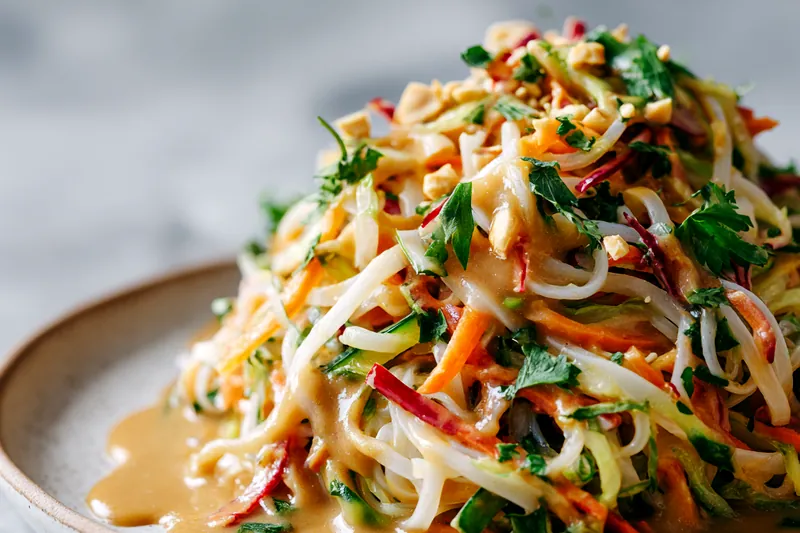
The quality of your vegetables directly impacts the final dish since they're served raw. Choose firm, crisp cabbage with tightly packed leaves and vibrant color - avoid any with brown edges or wilting. Carrots should be firm and bright orange without soft spots. Red bell peppers should have glossy, unwrinkled skin and feel heavy for their size, indicating freshness and juiciness. Cucumbers should be firm throughout with no soft areas, and Persian or English cucumbers work best as they have fewer seeds and sweeter flavor than standard varieties.
For the dressing components, use toasted sesame oil rather than regular sesame oil - it has a much richer, nuttier flavor that's essential to authentic Asian taste. Choose natural rice vinegar, not seasoned rice vinegar, so you can control the sweetness level yourself. Fresh ginger root should have smooth, tight skin and smell fragrant and spicy when scratched. Avoid wrinkled, dried-out ginger as it loses potency. Quality soy sauce makes a difference too; naturally brewed varieties have more complex flavor than chemical-based versions.
Essential Ingredient Notes
- Rice Noodles: Look for thin or medium-width rice noodles (pad thai style) rather than very thin vermicelli which can become mushy. Check the package for breakage - excessive broken pieces indicate age or rough handling. Store in a cool, dry place and use within the expiration date for best texture when cooked.
- Sesame Oil: Always buy toasted (or roasted) sesame oil, which has a dark amber color and intense nutty aroma. Regular sesame oil is nearly flavorless by comparison. Store in a cool, dark place or refrigerate after opening to prevent rancidity. A little goes a long way - its flavor is potent and can overwhelm if overused.
- Fresh Ginger: Choose ginger with smooth, tight skin and firm flesh. Young ginger has thinner skin and milder flavor, while mature ginger is more fibrous but packs more punch. Store unpeeled ginger in the refrigerator wrapped in paper towels inside a plastic bag for up to three weeks, or freeze for up to six months. Grate on a microplane for the finest texture.

Mastering the Assembly Technique
The key to perfect noodle salad is mixing technique. Use a large bowl - bigger than you think you need - to allow room for proper tossing without ingredients flying everywhere. Add the dressing gradually while using tongs or two large spoons to lift and fold the noodles from bottom to top, ensuring every strand gets coated. This gentle folding motion is much more effective than aggressive stirring, which can break the noodles and bruise the vegetables. The goal is even distribution of dressing without damaging the delicate components.
Temperature management is crucial for both texture and food safety. The noodles should be completely cooled before vegetables are added - warm noodles will wilt fresh vegetables immediately. However, don't let noodles sit too long before dressing them, as they'll dry out and become harder to separate. The ideal window is assembling within 30 minutes of cooking the noodles. If making ahead, keep components separate until 2-4 hours before serving, then mix and refrigerate. This allows flavors to meld while maintaining optimal texture.
The Perfect Julienne Cut
Julienning vegetables into thin, uniform matchsticks ensures they integrate seamlessly with the noodles and look professional. Use a sharp knife or mandoline slicer for consistent results. Cut carrots and cucumbers into 2-3 inch segments, then slice each piece into thin planks before cutting those planks into thin strips. Keep your cuts uniform - about 1/8 inch thick and 2-3 inches long - so they're the same approximate size as the noodles. This creates visual harmony and ensures every forkful has perfect proportions of noodles to vegetables.
Asian Sesame Noodle Salad with Ginger Peanut Dressing
📋 Ingredients
Dressing Ingredients
- 3 tablespoons sesame oilUse toasted sesame oil for authentic nutty flavor
- 3 tablespoons rice vinegarUnseasoned variety preferred for flavor control
- 2 tablespoons soy sauceLow-sodium works well if watching salt intake
- 2 tablespoons creamy peanut butterRoom temperature for easier mixing
- 1 tablespoon honeyBalances acidity and adds subtle sweetness
- 1 tablespoon fresh ginger, gratedPeel before grating for best texture
- 2 cloves garlic, mincedFresh garlic adds essential aromatic depth
Salad Components
- 8 oz rice noodles or linguineCook to al dente and rinse thoroughly
- 2 cups shredded cabbagePurple or green cabbage both work beautifully
- 1 large carrot, juliennedCut into thin matchsticks for best texture
- 1 red bell pepper, thinly slicedAdds sweetness and vibrant color
- 1 cucumber, juliennedPersian or English cucumbers work best
- 3 green onions, slicedBoth white and green parts for maximum flavor
- 1/4 cup fresh cilantro, choppedAdd just before serving to keep bright green
- 2 tablespoons toasted sesame seedsGarnish that adds nutty flavor and crunch
- 1/4 cup roasted peanuts, choppedFinal topping for texture and richness
Instructions
Cook the Noodles
Bring a large pot of water to boil. Cook noodles according to package directions until al dente, usually 8-10 minutes. Drain and rinse under cold water to stop cooking and remove excess starch. Set aside in a large mixing bowl.
Prepare the Vegetables
While noodles cook, julienne the carrot and cucumber into thin matchsticks. Thinly slice the red bell pepper and green onions. Shred the cabbage if not pre-shredded. Keep vegetables crisp by preparing them just before assembly.
Make the Dressing
In a medium bowl, whisk together sesame oil, rice vinegar, soy sauce, peanut butter, honey, grated ginger, and minced garlic until smooth and emulsified. If the peanut butter is thick, add 1-2 tablespoons of warm water to achieve a pourable consistency.
Combine and Toss
Add all prepared vegetables to the bowl with cooled noodles. Pour the dressing over the noodle mixture and toss thoroughly using tongs to ensure even coating. Add fresh cilantro and half the sesame seeds, tossing once more.
Garnish and Serve
Transfer the salad to a serving platter or individual bowls. Top with remaining sesame seeds and chopped roasted peanuts for crunch. Serve immediately at room temperature or chill for 30 minutes for a cold salad. Best enjoyed within 2 hours of preparation for optimal texture.
Recipe Notes & Tips
Storage
Store in an airtight container in the refrigerator for up to 3 days. The salad will release some liquid as it sits - simply drain before serving. For best results, store extra dressing separately and refresh the salad with it before serving leftovers.
Serving Suggestions
Serve as a light main course or side dish with grilled chicken, teriyaki salmon, or Korean BBQ. Also excellent alongside spring rolls or potstickers for an Asian-inspired feast. Top with grilled protein, tofu, or a soft-boiled egg for a complete meal.
Variations
Make it spicy by adding 1-2 teaspoons sriracha to the dressing. Swap peanut butter for almond butter or tahini. Use soba noodles instead of rice noodles. Add edamame, snap peas, or shredded rotisserie chicken for extra protein. Substitute almond butter for peanut butter or use sunflower seed butter for nut-free versions.