Creamy Chicken and Asparagus Orzo Skillet
Discover the ultimate weeknight dinner solution with our Creamy Chicken and Asparagus Orzo Skillet. This one-pan wonder brings together tender chicken, fresh asparagus, and al dente orzo pasta in a luscious, savory cream sauce. It's incredibly easy to prepare, bursting with comforting flavors, and promises a hearty meal that the whole family will adore. Say goodbye to multiple pots and hello to a simple, satisfying skillet creation perfect for any occasion.


Why This Creamy Chicken and Asparagus Orzo Skillet Recipe Works
This Creamy Chicken and Asparagus Orzo Skillet stands out for its exceptional balance of flavor and convenience. By cooking everything in a single skillet, we maximize flavor integration, allowing the chicken and vegetable juices to infuse the orzo and sauce. The rich, creamy texture combined with the vibrant freshness of asparagus creates a satisfying harmony that appeals to all palates. It's a testament to how simple ingredients can yield extraordinary, restaurant-quality results in your own kitchen.
The secret to this recipe's success lies in a few key techniques. Searing the chicken first locks in its juices and builds a flavorful fond at the bottom of the pan, which then becomes the base for the sauce. Gradually adding the orzo and broth ensures a perfectly al dente pasta without the need for a separate pot. Finally, incorporating the heavy cream and Parmesan at the end creates a silky, luxurious sauce that coats every component beautifully, resulting in a cohesive and utterly delicious dish that feels both gourmet and comforting.
💡 Professional Tip
For an extra layer of flavor and to ensure perfectly tender chicken, consider brining your chicken breasts for 30 minutes in a saltwater solution before cooking. This helps keep the chicken incredibly juicy and prevents it from drying out during the searing process. Always allow the skillet to get sufficiently hot before adding the chicken for a good, even sear and golden crust.
Frequently Asked Questions
While best served fresh for optimal texture, you can partially prepare this dish. Cook the chicken and sauté the aromatics. Cook the orzo and asparagus until almost done, then store separately in airtight containers. When ready to serve, combine everything in the skillet, add the cream and cheese, and heat gently until warmed through. You might need a splash more broth or cream to loosen the sauce and restore its creamy consistency.
If asparagus isn't in season or you prefer something else, several vegetables work well. Broccoli florets, green beans, or even spinach (added at the very end until wilted) are great alternatives. You could also use frozen peas for a quick addition, stirring them in with the cream and cheese during the final steps. Adjust cooking times as needed for your chosen vegetable to ensure it’s tender-crisp.
The chicken should be cooked through with an internal temperature of 165°F (74°C). The orzo pasta should be al dente, tender but still with a slight bite, and most of the liquid should be absorbed, creating a creamy texture. The asparagus should be tender-crisp, bright green, and not mushy. The sauce should be thickened and creamy, beautifully coating all ingredients without being soupy.
Freezing is generally not recommended for creamy pasta dishes, as the cream can separate and the pasta can become mushy upon thawing and reheating. If you absolutely must freeze it, ensure it's in an airtight container for no more than 1-2 months. Thaw overnight in the refrigerator and reheat gently on the stovetop over low heat, adding extra liquid like broth or milk as needed to restore creaminess.
This skillet is a complete meal on its own, offering protein, vegetables, and carbs. However, if you'd like to add a side, a simple green salad with a light vinaigrette would be perfect to cut through the richness and add a fresh element. Crusty bread or garlic bread is also excellent for soaking up any extra creamy sauce. A light, dry white wine like Sauvignon Blanc or Pinot Grigio pairs beautifully with this dish.
Leftovers of Creamy Chicken and Asparagus Orzo Skillet should be stored in an airtight container in the refrigerator for up to 3-4 days. For best quality, reheat gently on the stovetop over low heat, stirring occasionally and adding a splash of chicken broth or milk to rehydrate the sauce if it has thickened too much. Avoid microwaving on high heat as it can dry out the chicken and pasta.
As with many pasta dishes, this skillet is best enjoyed immediately after preparation for optimal texture and creaminess. However, you can significantly reduce your active cooking time on the day you plan to serve it by prepping components in advance. Dice the chicken, chop the onions and garlic, trim and cut the asparagus, and measure out all other ingredients the day before. This streamlines the cooking process.
To reheat, place individual portions in a microwave-safe dish with a splash of milk or chicken broth, then microwave on medium power, stirring every minute, until heated through. For larger portions, gently reheat in a skillet on the stovetop over medium-low heat. Add 1-2 tablespoons of chicken broth or milk, stir occasionally, and heat until warmed through and creamy. This helps prevent the orzo from drying out.
Recipe Troubleshooting Guide
Too Dry
Problem: The orzo skillet appears too dry, and the sauce has thickened excessively or evaporated.
Solution: If your skillet seems too dry, simply add a splash more chicken broth or heavy cream, one tablespoon at a time, while gently stirring over low heat until the desired creamy and saucy consistency is achieved. Be careful not to add too much at once.
Orzo Sticky
Problem: The orzo pasta is sticking together in clumps or to the bottom of the pan during cooking.
Solution: To prevent this, ensure you stir the orzo occasionally, especially during the simmering phase, to ensure even cooking and prevent it from clumping or adhering to the bottom of the skillet. If it's already stuck, add a little more broth, gently scrape the bottom with a wooden spoon, and continue stirring frequently.
Overcooked Asparagus
Problem: The asparagus has lost its vibrant green color and turned mushy or stringy.
Prevention: To prevent overcooked asparagus, make sure you add it only for the last 3-5 minutes of cooking the orzo, or just until it's tender-crisp. Alternatively, you can blanch the asparagus separately and stir it into the skillet at the very end with the cream and cheese for maximum freshness and bite.
Bland Flavor
Problem: The overall flavor of the dish seems to lack depth or a certain 'pop'.
Recovery: Ensure adequate seasoning throughout the cooking process – taste and adjust. A squeeze of fresh lemon juice at the end can significantly brighten flavors. A pinch of red pepper flakes can add a subtle kick, and a generous garnish of fresh parsley or chives always boosts freshness and aroma. Don't underestimate the power of freshly grated Parmesan.
Sauce Curdled
Problem: The creamy sauce has separated, appears grainy, or looks curdled.
Prevention: This usually happens if the cream is added to a pan that is too hot or if the sauce is boiled vigorously after adding dairy. To prevent this, ensure the heat is reduced to low before stirring in the heavy cream and Parmesan cheese, and do not let the mixture come to a rolling boil afterwards. If it has curdled, try removing it from the heat and whisking vigorously, sometimes a small amount of cold cream can help stabilize it.
Flavor Balance
Too Sweet: If the unlikely event of being too sweet (perhaps from an unusual broth or added ingredient), a dash of white vinegar or extra lemon juice can help cut the sweetness, or a tiny pinch of salt to balance.
Too Salty: If the dish tastes too salty, add a small amount of unsalted chicken broth or heavy cream to dilute it. A squeeze of fresh lemon juice can also help to cut through the saltiness. Incorporating more plain, cooked orzo (if available) can also effectively dilute the salt content.
Bland: For a bland dish, stir in more grated Parmesan cheese, a dash of garlic powder, a pinch of Italian seasoning, or a final squeeze of fresh lemon juice. Freshly chopped herbs like parsley or chives always boost the overall freshness and bright flavors. A tiny pinch of red pepper flakes can also awaken the palate.
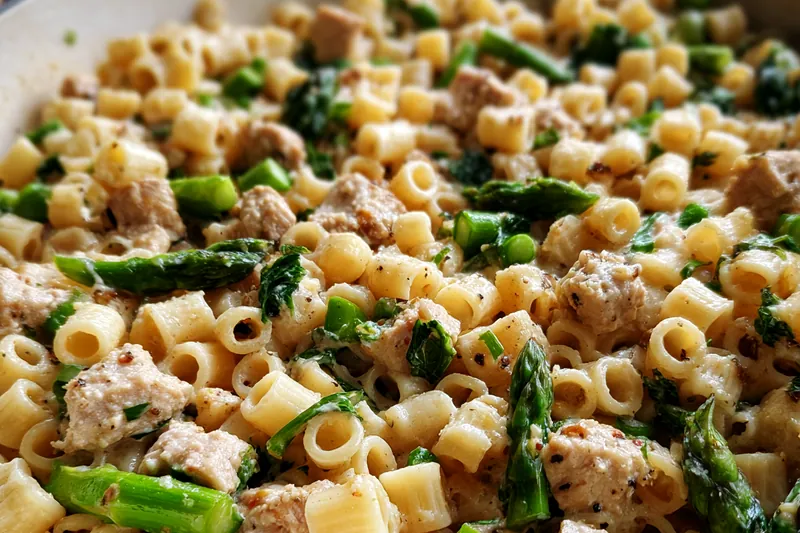
Essential Ingredients for Creamy Chicken and Asparagus Orzo Skillet
The heart of this Creamy Chicken and Asparagus Orzo Skillet lies in its core ingredients: boneless, skinless chicken breasts for lean protein, fresh asparagus for vibrant color and essential nutrients, and orzo pasta for its delightful rice-like texture that absorbs the creamy sauce beautifully. The rich, savory base is built with heavy cream and grated Parmesan cheese, while aromatics like finely chopped onion and minced garlic provide crucial depth of flavor.
Choosing high-quality ingredients significantly elevates this skillet from good to extraordinary. Opt for fresh, firm asparagus spears with tightly closed tips, indicating peak freshness. Select good quality Parmesan cheese, ideally freshly grated from a block, as it melts smoother and provides a superior, authentic nutty flavor compared to pre-shredded varieties. Using a robust, low-sodium chicken broth, whether homemade or a premium store-bought brand, will greatly enhance the overall richness and savory profile of the dish.
Essential Ingredient Notes
- Chicken Breasts: For the juiciest chicken in your skillet, ensure you don't overcook it during the initial searing. Cook until just golden brown on the outside and cooked through to an internal temperature of 165°F (74°C), then immediately remove from the pan to rest. This allows the meat fibers to relax and reabsorb juices, preventing dry chicken once diced or shredded and stirred back into the orzo.
- Asparagus: To prepare asparagus, simply snap off the woody ends—they will naturally break at the tender point, saving you from tough bites. For even cooking and bite-sized pieces in the skillet, cut the spears into 1-inch segments. Adding them towards the end of the orzo cooking time ensures they remain crisp-tender and don't become overcooked and mushy, retaining their vibrant color and delicate crunch.
- Orzo Pasta: Orzo pasta cooks relatively quickly and absorbs liquid readily. Toasting it lightly in the skillet before adding the chicken broth not only enhances its nutty flavor but also helps it retain a slightly firmer texture, preventing it from becoming too soft. Remember to stir frequently during the simmering phase to prevent it from sticking to the bottom of the pan and ensure even cooking throughout the dish.

Step-by-Step Cooking Process
The cooking process for this Creamy Chicken and Asparagus Orzo Skillet is thoughtfully designed for both efficiency and maximum flavor development. We begin by searing the chicken to create a delicious base, building a foundational layer of savory notes. Then, we methodically build the sauce and cook the pasta directly in the same pan, allowing all the ingredients to meld and infuse, ensuring that every bite is bursting with the richness of the chicken and aromatics.
Achieving perfect results in this skillet meal means paying attention to a few key moments. Don't rush the searing of the chicken; a good golden-brown crust adds significant depth of flavor. When simmering the orzo, keep a watchful eye on the liquid absorption and stir periodically to prevent sticking and ensure even cooking. Finally, integrate the heavy cream and Parmesan cheese over lower heat to ensure a smooth, uncurdled sauce that beautifully coats the tender chicken, vibrant asparagus, and perfectly cooked orzo.
Key Technique for Perfect Creamy Chicken and Asparagus Orzo Skillet
The most crucial technique for this Creamy Chicken and Asparagus Orzo Skillet is building layers of flavor directly in the skillet. Starting with searing the chicken creates a foundational 'fond'—those browned bits—on the pan's bottom. This richly flavored residue is then deglazed as you sauté the aromatics and simmer the orzo, incorporating deep, savory notes into the entire dish. This one-pan approach truly infuses every component with a complex, cohesive flavor profile that cannot be achieved with separate cooking methods.
Creamy Chicken and Asparagus Orzo Skillet
📋 Ingredients
Main Ingredients
- 2 tbsp unsalted butter
- 1 small yellow onionFinely chopped
- 2 cloves garlicMinced
- 2 cups chicken brothLow sodium
- 1/2 cup heavy cream
- 1/2 cup grated Parmesan cheesePlus more for serving
- 1 tbsp fresh lemon juice
- 1/4 cup sun-dried tomatoes in oilDrained and chopped (optional)
For the Sauce
- 1.5 lbs boneless, skinless chicken breastsCut into 1-inch pieces after cooking
- 1 tbsp olive oilFor searing
- 1 bunch asparagus (about 1 lb)Woody ends trimmed, cut into 1-inch pieces
- 1 cup orzo pastaUncooked
- 1/4 cup fresh parsleyChopped, for garnish
- 1 tsp dried Italian seasoning
- SaltTo taste
- Freshly ground black pepperTo taste
Instructions
Prepare and Sear Chicken
Pat chicken breasts dry with paper towels. Season generously with salt, black pepper, and Italian seasoning. Heat olive oil in a large (12-inch) oven-safe skillet or Dutch oven over medium-high heat. Add chicken and sear for 5-7 minutes per side until golden brown and cooked through (internal temperature 165°F / 74°C). Remove chicken from the skillet, tent with foil, and let rest for 5-10 minutes. Once cooled slightly, dice or shred the chicken.
Sauté Aromatics
Reduce heat to medium. Add unsalted butter to the same skillet. Add the finely chopped yellow onion and sauté for 3-4 minutes until softened and translucent, scraping up any browned bits from the bottom of the pan. Add the minced garlic and cook for another minute until fragrant, being careful not to burn it.
Toast Orzo
Add the uncooked orzo pasta to the skillet. Stir constantly for 1-2 minutes to lightly toast the orzo, giving it a slightly nutty flavor and helping it retain its shape.
Simmer Orzo
Pour in the chicken broth. Bring the mixture to a simmer, then reduce the heat to medium-low. Cover the skillet and cook for 10-12 minutes, or until most of the liquid has been absorbed and the orzo is tender but still al dente, stirring occasionally to prevent sticking.
Add Asparagus
Stir the chopped asparagus into the orzo mixture. Cover the skillet again and continue to cook for an additional 3-5 minutes, or until the asparagus is tender-crisp and bright green. Avoid overcooking to maintain its texture.
Create the Creamy Sauce
Stir in the heavy cream, grated Parmesan cheese, fresh lemon juice, and the diced/shredded cooked chicken. If using, add the chopped sun-dried tomatoes at this stage for an extra layer of savory flavor.
Finish and Season
Continue to cook, stirring gently, for 2-3 minutes until the sauce has thickened slightly and all ingredients are heated through. Taste and adjust seasoning with additional salt and black pepper as needed. The sauce should be rich and creamy.
Garnish and Serve
Remove the skillet from the heat. Stir in the fresh chopped parsley. Serve immediately, garnished with extra grated Parmesan cheese if desired. Enjoy your comforting Creamy Chicken and Asparagus Orzo Skillet!
Recipe Notes & Tips
Storage Tips
Store any leftover Creamy Chicken and Asparagus Orzo Skillet in an airtight container in the refrigerator for up to 3-4 days. To reheat, gently warm on the stovetop over low heat, adding a splash of chicken broth or milk to restore its creamy consistency and prevent the orzo from drying out. Stir occasionally until heated through.
Serving Suggestions
This skillet is a wholesome meal on its own, offering protein, vegetables, and carbohydrates in one dish. However, you can elevate it further by serving it alongside a crisp green salad with a light vinaigrette for a refreshing contrast. A warm, crusty baguette or garlic bread is also perfect for soaking up any extra delicious creamy sauce. Garnish with additional fresh Parmesan and a sprinkle of red pepper flakes for extra flair.
Recipe Variations
Feel free to customize this Creamy Chicken and Asparagus Orzo Skillet to your liking! Swap chicken for shrimp or Italian sausage (cooked separately) for a different protein. Instead of asparagus, try broccoli florets, green beans, or even fresh spinach (added at the very end until wilted). For a richer sauce, add a splash of dry white wine when deglazing the pan after cooking the chicken. A sprinkle of fresh basil or thyme at the end can also add wonderful aromatic complexity.