Silky Polenta with Eggs
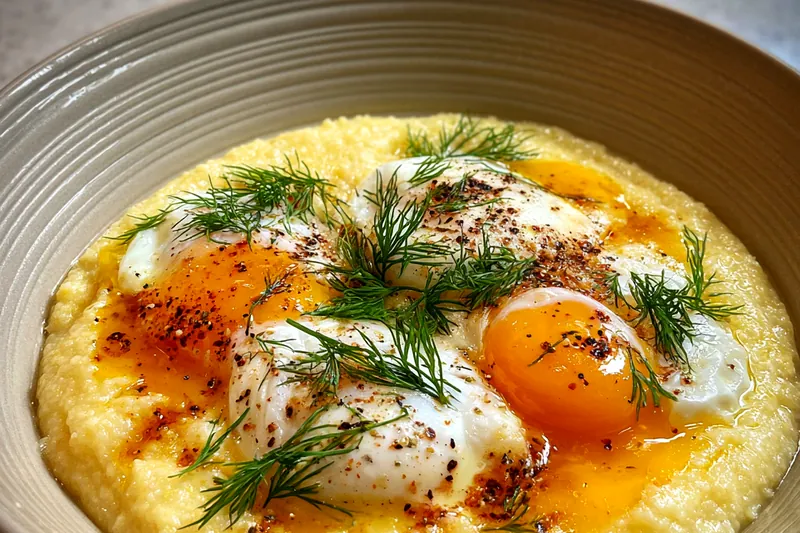
Silky Polenta with Eggs is a comforting Italian dish that combines creamy, buttery polenta topped with perfectly cooked eggs. This recipe is a delightful way to start your day or enjoy a hearty brunch. The rich flavors and smooth textures make it a favorite among both family and friends.


Why This Silky Polenta with Eggs Recipe Works
This recipe for Silky Polenta with Eggs stands out due to its incredibly creamy texture and rich flavors. By cooking the polenta slowly and adding cheese and butter, the result is a luxurious base that pairs perfectly with the runny yolks of the eggs. The combination is not only satisfying but also visually appealing.
The flavor profile is elevated by fresh herbs and a hint of red pepper flakes, which provide a pleasant contrast to the creamy polenta. The cooking method, with a focus on low heat and careful stirring, ensures a smooth and silky final product.
💡 Professional Tip
For the creamiest polenta, whisk continuously while adding the polenta to the boiling water to avoid lumps. Cooking it slowly allows the cornmeal to absorb more water, enhancing its creaminess.
Frequently Asked Questions
Yes, you can prepare the polenta ahead of time. Allow it to cool, then refrigerate it. When ready to serve, reheat it gently and whisk in a little water or cream to restore its creaminess. Cook the eggs fresh just before serving.
You can substitute polenta with grits or cornmeal, but keep in mind that the texture and flavor may vary slightly. Adjust the cooking times according to the grain you choose for the best results.
The best method is to slowly cook the polenta on low heat while stirring continuously. This prevents lumps and ensures a silky texture. You can also use a double boiler for more controlled cooking, but it takes longer.
To prevent lumps, always whisk the polenta into the boiling water slowly and continuously. If lumps do form, you can use an immersion blender to smooth them out after cooking.
The polenta is done when it has thickened to a creamy consistency and pulls away from the sides of the pot. The eggs should be cooked until the whites are set and the yolks remain slightly runny.
Silky Polenta with Eggs pairs well with a side of sautéed greens or a fresh salad. You can also add crispy bacon or smoked salmon for an extra protein boost.
Yes! To make it spicier, add more red pepper flakes or a dash of hot sauce to the eggs. You can also incorporate spicy sausage or jalapeños into the polenta for added heat.
Store leftover polenta in an airtight container in the refrigerator for up to 3 days. To reheat, add a splash of water or cream and stir until creamy. Cook fresh eggs to serve on top again.
Recipe Troubleshooting Guide
Polenta Too Thick
Problem: If the polenta is too thick and hard to stir, it may have absorbed too much water.
Solution: Add a little warm water or cream to the polenta and stir until it reaches your desired consistency. Adjust the liquid slowly to avoid making it too thin.
Eggs Overcooked
Problem: Overcooked eggs can become rubbery and lose their creamy yolk.
Solution: Cook the eggs on medium heat and watch them closely. Remove them from the heat as soon as the whites are set but the yolks are still soft.
Polenta Lumpy
Problem: Lumpy polenta can occur if not whisked properly during cooking.
Prevention: Use an immersion blender to blend the polenta until smooth after cooking. Whisking continuously while adding polenta to boiling water helps prevent lumps.
Flavorless Polenta
Problem: If the polenta lacks flavor, it may not have been seasoned enough.
Recovery: Always season the cooking water with salt before adding the polenta. You can also stir in cheese, butter, or herbs after cooking for added flavor.
Eggs Stick to the Pan
Problem: Eggs can stick if the pan is not properly greased or heated.
Prevention: Ensure the skillet is well-oiled and preheated before cooking the eggs. Use a non-stick pan to make flipping and serving easier.
Flavor Balance Issues
Too Sweet: If the dish is too sweet, balance it with a pinch of salt or a splash of vinegar.
Too Salty: If it’s too salty, add more cream or cheese to mellow the flavor.
Bland: If the dish is bland, enhance it with fresh herbs, spices, or a drizzle of olive oil for richness.

Choosing the Best Ingredients for Silky Polenta with Eggs
Selecting high-quality ingredients is essential for this dish. Opt for stone-ground polenta for a richer flavor and better texture. Fresh eggs from local farms can elevate the overall taste, and using real Parmesan cheese instead of processed versions makes a significant difference.
Preparation is also crucial. Ensure the polenta is fully cooked and creamy before serving, and use fresh herbs for garnish to brighten the dish. The eggs should be sourced as fresh as possible for the best texture and flavor.
Essential Ingredient Notes
- Polenta: Choose stone-ground polenta for the best texture. It cooks up creamier than instant varieties and gives a richer flavor to the dish.
- Eggs: Use the freshest eggs you can find. They will not only taste better but will also have a firmer structure, allowing for better frying or poaching.
- Parmesan Cheese: Opt for freshly grated Parmesan for a more robust flavor. Pre-grated cheese can lack depth and creaminess when melted into the polenta.
Mastering the Cooking Technique
The key to perfect Silky Polenta is cooking it slowly and stirring consistently. This method allows the polenta to absorb water fully and become incredibly creamy. Start by whisking the polenta into boiling water and reduce the heat to low to control the cooking process.
Timing is crucial. The polenta should simmer gently for about 20 minutes, stirring frequently. The visual cue for doneness is when it pulls away from the sides of the pot. Ensure the eggs are cooked until the whites are firm while keeping the yolks runny for the best texture contrast.
The Secret to Perfect Silky Polenta with Eggs
The secret lies in the gradual addition of polenta to boiling water while whisking. This technique ensures a lump-free, creamy consistency, making your Silky Polenta exceptionally smooth and enjoyable.
Silky Polenta with Eggs
📋 Ingredients
{{ingredient_category_1}}
-
{{sauce_ingredients}}
{{ingredient_category_2}}
-
{{main_ingredients}}
Instructions
-
{{instructions_list}}
Recipe Notes & Tips
{{note_1_title}}
{{note_1_content}}
{{note_2_title}}
{{note_2_content}}
{{note_3_title}}
{{note_3_content}}