Golden Flaky Spinach and Cheese Pinwheels
These Golden Flaky Spinach and Cheese Pinwheels are the ultimate party appetizer that disappears within minutes! Buttery puff pastry wrapped around a creamy blend of spinach, cream cheese, mozzarella, and Parmesan creates irresistible bite-sized spirals that are as beautiful as they are delicious. Perfect for game day, holiday gatherings, or any time you need an impressive yet easy crowd-pleaser.

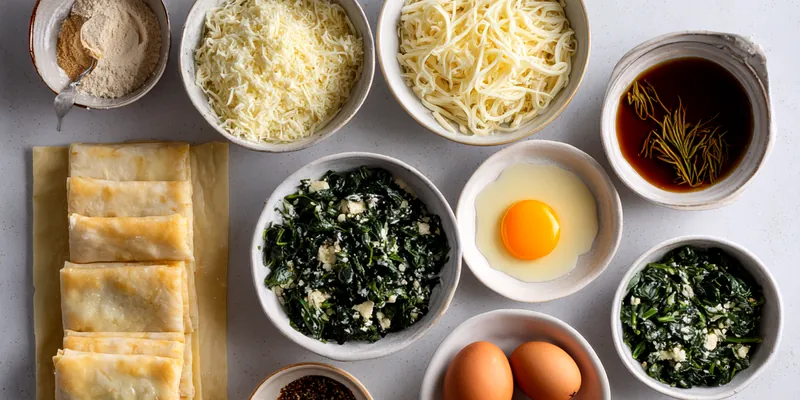
Why These Spinach Cheese Pinwheels Are Perfect for Any Occasion
Spinach and cheese pinwheels have become a beloved appetizer staple because they deliver restaurant-quality presentation with surprisingly minimal effort. The visual appeal of those perfect spirals instantly elevates any appetizer spread, making them ideal for everything from casual game day gatherings to elegant holiday parties. What makes these particularly special is the combination of three cheeses - cream cheese provides the creamy base, mozzarella gives you that satisfying cheese pull, and Parmesan adds sharp, nutty complexity that prevents the filling from tasting one-dimensional.
The beauty of using puff pastry is that it does most of the heavy lifting for you. While the ingredient list might look involved, the actual hands-on time is minimal - just mix the filling, spread, roll, chill, slice, and bake. The chilling step is crucial because it firms up both the pastry and filling, allowing you to create those clean, professional-looking slices. Many first-time makers skip this step and end up with squished, messy pinwheels, but fifteen minutes in the refrigerator makes all the difference between amateur and professional results.
💡 Professional Tip
Always squeeze excess moisture from your spinach, even if using fresh. Wet spinach will make the pastry soggy and prevent it from achieving that signature flaky, golden exterior. I wrap chopped spinach in a clean kitchen towel and twist it hard over the sink - you'll be surprised how much water comes out.
Frequently Asked Questions
Absolutely! These pinwheels are excellent make-ahead appetizers. You can prepare the rolled logs up to 24 hours in advance, wrap them tightly in plastic wrap, and refrigerate until ready to slice and bake. For longer storage, freeze the wrapped logs for up to 3 months. When ready to use, slice them while still frozen (they actually slice more cleanly when frozen) and add 3-5 minutes to the baking time. You can also bake them completely, let them cool, and refrigerate for up to 2 days, then reheat at 350°F for 5-7 minutes to restore crispness.
Yes, frozen spinach works perfectly and is often more convenient. Use about 1 cup of frozen spinach (measured after thawing). The critical step is to thaw it completely, then squeeze out every bit of liquid - and I mean every bit. Frozen spinach holds significantly more water than fresh, so if you don't remove it thoroughly, your pinwheels will be soggy. I recommend thawing it in the microwave, letting it cool, then wrapping it in several layers of paper towels or a clean kitchen towel and squeezing hard until no more water comes out.
This usually happens for one of three reasons: the pastry wasn't chilled long enough before slicing, the seal wasn't properly secured with water, or the pastry was too warm when you rolled it. Make sure you chill the rolled logs for at least 15 minutes (20-30 minutes is even better), brush that border edge with water before sealing, and if your pastry becomes too soft and sticky while working with it, pop it back in the fridge for 10 minutes. Also ensure you're rolling the pastry tightly from the beginning - a loose roll will unravel more easily during baking.
You can customize the cheese blend while keeping the cream cheese base, which is essential for the right consistency. Swap the mozzarella for provolone, white cheddar, or Gruyère for different flavor profiles. Feta cheese adds a tangy Greek twist (reduce salt if using feta as it's quite salty). You can also add 2-3 tablespoons of crumbled goat cheese for extra tang. However, I don't recommend using all hard cheeses or all soft cheeses - you need that balance between the spreadable cream cheese and the melting harder cheeses for the best texture and flavor.
Perfectly baked pinwheels should be puffed up significantly, with a deep golden-brown color on top and visible flaky layers along the sides. The bottom should be golden (carefully lift one with a spatula to check) rather than pale or soggy. Internal temperature should reach 190-200°F. They'll continue to firm up as they cool, so don't worry if they seem slightly soft when first removed from the oven. If the tops are browning too quickly but the sides are still pale, reduce oven temperature to 375°F and bake a few minutes longer. Every oven is different, so check at 18 minutes and adjust as needed.
These pinwheels are delicious on their own, but they pair beautifully with various dipping sauces. Marinara sauce is classic and complements the Italian cheese flavors. Garlic aioli or ranch dressing adds creamy richness. For something different, try a balsamic glaze drizzle or a spicy sriracha mayo. As part of an appetizer spread, serve them alongside fresh vegetables with dip, a cheese board, stuffed mushrooms, or bruschetta. For a more substantial offering, pair with a simple arugula salad dressed with lemon vinaigrette. They also work wonderfully as a side with soup - tomato basil soup is particularly complementary.
Absolutely! This recipe is wonderfully versatile. Popular additions include sun-dried tomatoes (chopped and oil-drained), cooked and crumbled bacon or pancetta, sautéed mushrooms (well-drained), roasted red peppers (patted dry), artichoke hearts (chopped and drained), or fresh herbs like basil, dill, or parsley. Just remember that any additions should be finely chopped and relatively dry to prevent sogginess. Don't add more than 1/2 cup total of additional ingredients or the filling becomes difficult to spread and may ooze out during baking.
Store cooled leftover pinwheels in an airtight container in the refrigerator for up to 3 days. They're best reheated rather than eaten cold - place them on a baking sheet and warm at 350°F for 5-8 minutes to restore the flaky texture. Don't microwave them as this makes the pastry rubbery and soggy. For longer storage, freeze baked pinwheels in a single layer on a baking sheet until solid, then transfer to a freezer bag for up to 2 months. Reheat from frozen at 375°F for 10-12 minutes.
Recipe Troubleshooting Guide
Soggy or Undercooked Bottom
Problem: The tops of your pinwheels are golden but the bottoms are pale, soggy, or undercooked, and the pastry isn't achieving those flaky layers.
Solution: This happens when there's too much moisture in the filling or the oven isn't hot enough. Always thoroughly squeeze moisture from spinach - this is the #1 cause of soggy pinwheels. Make sure your oven is fully preheated to 400°F before baking. Use parchment paper or a silicone mat rather than greasing the pan, which can make bottoms soggy. If your oven tends to bake unevenly, bake pinwheels on the lower-middle rack position to ensure bottom heat. You can also try baking on a preheated baking sheet for extra bottom crispness.
Filling Oozing Out During Baking
Problem: Your cheese filling is melting out of the pinwheels and creating a mess on the baking sheet instead of staying contained in the spiral.
Solution: This typically means you've overfilled the pastry or didn't leave enough border for sealing. Use exactly the amount of filling specified and spread it evenly, leaving a full 1/2-inch border. Make sure you're rolling the pastry tightly without air pockets, which can cause filling to escape. The chilling step helps firm up the filling so it doesn't melt out as quickly. If you've added extra ingredients to the filling, reduce the cream cheese slightly. Also ensure your cream cheese was properly softened (not melted) when mixing - melted cream cheese is too liquid and will run out during baking.
Pinwheels Not Puffing Up
Problem: Your pinwheels are staying flat instead of achieving that beautiful puffy, layered appearance that makes puff pastry special.
Prevention: Puff pastry needs cold butter and hot oven to create steam and rise properly. If your pastry got too warm while working with it, the butter melted before baking, preventing proper puffing. Always keep pastry cold - work quickly and refrigerate if it becomes soft. Don't skip the 15-minute chill time for the rolled logs. Make sure your oven is fully preheated to 400°F. Avoid pressing down on the pastry when spreading filling. Use light pressure with the rolling pin when initially rolling out the pastry - overworking it compresses the layers. Finally, check your puff pastry expiration date - old pastry won't puff as well.
Uneven Slicing or Squished Pinwheels
Problem: When you slice the rolled logs, the pinwheels get squished, the filling squeezes out, or the slices are uneven thicknesses, resulting in messy-looking appetizers.
Recovery: This is almost always due to insufficient chilling time. The log needs to be firm enough that a sharp knife can slice cleanly through without pressure. Chill for a full 15-20 minutes minimum, or even 30 minutes for best results. Use a very sharp chef's knife and wipe it clean between each cut. Instead of pressing straight down, use a gentle sawing motion. If the log becomes soft while slicing, return it to the refrigerator for 5-10 minutes. Some people even have success partially freezing the logs for 30 minutes, which allows for ultra-clean slices. Measure as you go to ensure even 1-inch slices - the first few and last few slices can be slightly thicker to use up the ends.
Bland or Underseasoned Filling
Problem: Your pinwheels look perfect but taste bland, lacking the flavorful punch you expected from the cheese and spinach combination.
Prevention: Cream cheese can mute other flavors, so you need to season more boldly than you think. Make sure you're using full-fat cream cheese (low-fat versions have less flavor). Don't skimp on the garlic - use fresh minced garlic rather than garlic powder for maximum impact. The salt is crucial - 1/2 teaspoon might seem like a lot, but it's distributed through 24 pinwheels. Add a squeeze of fresh lemon juice (about 1 teaspoon) to brighten all the flavors. Taste your filling before rolling - it should taste quite flavorful on its own. Consider adding 1/4 teaspoon of nutmeg, which enhances spinach beautifully, or a teaspoon of Dijon mustard for depth.
Flavor Balance Issues
Too Sweet: These pinwheels shouldn't taste sweet, so this is rare. If using caramelized onions or roasted red peppers as additions, their natural sweetness might come through strongly. Balance with an extra pinch of salt and a squeeze of lemon juice.
Too Salty: If they taste too salty, you may have used pre-shredded cheese (which contains anti-caking agents and more salt) or didn't measure the salt properly. Next time, use block cheese you shred yourself and measure carefully. You can't fix baked pinwheels, but serve them with a creamy, unsalted dipping sauce to balance.
Bland: Add more garlic (up to 3-4 cloves), increase salt to 3/4 teaspoon, add 1/4 teaspoon of nutmeg, include red pepper flakes for heat, or mix in 1 teaspoon Dijon mustard. Fresh herbs like basil or dill add brightness. Always taste the filling before rolling and adjust seasonings - it should taste bold and flavorful on its own.
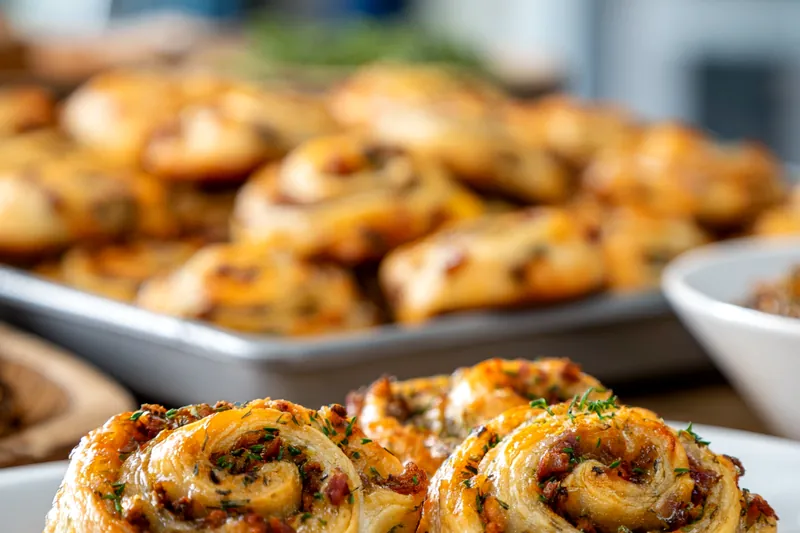
Choosing the Right Ingredients for Perfect Pinwheels
The quality of your ingredients directly impacts the final result with these pinwheels. For puff pastry, I recommend brands like Pepperidge Farm or Dufour (if you can find it - it's all-butter and creates incredibly flaky results). Always use frozen puff pastry rather than refrigerated crescent roll dough, which has a completely different texture and won't give you those signature flaky layers. Thaw the pastry according to package directions - usually overnight in the refrigerator or 30-40 minutes at room temperature. It should be cold but pliable, not frozen solid or warm and sticky.
For the filling, use full-fat cream cheese that's been softened to room temperature for at least 30-60 minutes. Cold cream cheese won't mix smoothly and will tear the pastry when you try to spread it. Fresh spinach is my preference because it has better flavor and texture than frozen, though frozen works if properly drained. When choosing hard cheeses, buy blocks and shred them yourself rather than using pre-shredded cheese. Pre-shredded cheese contains anti-caking agents (like cellulose powder) that prevent smooth melting and can make your filling grainy. Fresh garlic is essential - don't substitute garlic powder, as it lacks the pungent, aromatic quality that makes these pinwheels irresistible.
Essential Ingredient Notes
- Puff Pastry: Use high-quality frozen puff pastry and thaw it properly - it should be cold but rollable, not frozen or warm. All-butter varieties create the flakiest results. Handle it minimally and keep it cold while working. If it becomes too soft, refrigerate for 10 minutes before continuing.
- Fresh Spinach: Choose baby spinach or regular spinach with vibrant green leaves. Chop it finely so it distributes evenly in the filling. The most critical step is squeezing out all moisture - wrap it in a kitchen towel and twist hard over the sink. Wet spinach is the #1 cause of soggy pinwheels.
- Cream Cheese: Always use full-fat (not low-fat or whipped) cream cheese for best flavor and texture. Let it sit at room temperature for 30-60 minutes until soft enough to spread easily but not melted. You should be able to press your finger into it easily. This ensures smooth mixing and easy spreading on the pastry.

Mastering the Technique for Professional Results
The key to professional-looking pinwheels lies in three critical techniques: even spreading, tight rolling, and proper chilling. When spreading the filling, use an offset spatula or the back of a spoon to create an even layer that extends all the way to the edges except for that crucial 1/2-inch border on one long side. Uneven filling creates lopsided spirals. Roll the pastry tightly from the start, using your fingers to press out any air pockets as you go. Think of it like rolling a yoga mat - firm, even pressure throughout. A loose roll creates gaps in the spiral pattern and allows filling to escape during baking.
The chilling step is non-negotiable for clean slices and defined spirals. Fifteen minutes minimum gives the butter in the pastry time to firm up again and allows the cream cheese filling to solidify slightly. This prevents squishing when you slice. Use a sharp chef's knife and wipe it clean between cuts for the cleanest edges. When arranging on baking sheets, give them space - these will puff significantly and need room to expand without touching. The egg wash is optional but creates that gorgeous golden sheen and professional appearance. Don't skip rotating the pans halfway through baking, as this ensures even browning and prevents hot spots from over-cooking one side.
The Perfect Roll and Chill Technique
The difference between amateur and professional pinwheels comes down to how you roll and chill the pastry. Start by spreading your filling evenly, leaving that 1/2-inch border clean on one long edge. Beginning from the opposite edge, use both hands to start rolling the pastry over the filling, keeping tension consistent as you roll. After the first turn, use your fingers to press along the length of the roll, compacting it and removing air pockets. Continue rolling with even pressure - too loose and your spirals will have gaps; too tight and filling squeezes out. Once rolled, brush that clean border with water and press to seal. Wrap tightly in plastic wrap and refrigerate for 15-20 minutes until firm but not frozen. This chilling period is when the magic happens - the butter firms up, the filling solidifies slightly, and everything sets into a tight spiral that will slice cleanly and hold its shape during baking.
Golden Flaky Spinach and Cheese Pinwheels
📋 Ingredients
For the Filling
- 8 ounces cream cheese, softenedLet sit at room temperature for 30-60 minutes until spreadable but not melted
- 1 cup fresh spinach, finely choppedSqueeze out all excess moisture using a kitchen towel to prevent soggy pastry
- 1 cup shredded mozzarella cheeseShred from a block for best melting - pre-shredded contains anti-caking agents
- 1/2 cup grated Parmesan cheeseFreshly grated provides the best flavor and texture
- 2 cloves garlic, mincedFresh garlic is essential - don't substitute garlic powder
- 1/2 teaspoon onion powderAdds savory depth without chunks of onion
- 1/4 teaspoon red pepper flakesOptional but adds subtle warmth - omit for kid-friendly version
- 1/2 teaspoon saltEssential for bringing out all the flavors in the cheese mixture
- 1/4 teaspoon black pepperFreshly ground provides the best flavor
For the Pastry
- 2 sheets frozen puff pastry, thawedThaw in refrigerator overnight or at room temperature for 30-40 minutes - should be cold but rollable
- 1 egg beaten with 1 tablespoon waterCreates that beautiful golden brown sheen on top
- 2 tablespoons all-purpose flourFor dusting work surface to prevent sticking
Instructions
Prepare Filling and Preheat Oven
Preheat your oven to 400°F (200°C) and line two baking sheets with parchment paper or silicone mats. In a medium mixing bowl, combine the softened cream cheese, finely chopped spinach (moisture squeezed out), mozzarella, Parmesan, minced garlic, onion powder, red pepper flakes if using, salt, and black pepper. Mix with a spatula or wooden spoon until thoroughly combined and creamy with no cream cheese lumps remaining.
Roll and Fill First Pastry Sheet
On a lightly floured surface, carefully unfold one sheet of thawed puff pastry. Using a rolling pin with light pressure, gently roll it into a 10x12-inch rectangle, smoothing out any creases or folds. Using an offset spatula or the back of a spoon, spread half of the spinach and cheese mixture evenly over the entire surface of the pastry, leaving a clean 1/2-inch border along one long edge for sealing.
Create Tight Pinwheel Logs
Starting from the long edge opposite the clean border, begin tightly rolling the pastry toward the border edge. Use both hands to maintain even tension as you roll, pressing out any air pockets with your fingers as you go. When you reach the border, lightly brush it with water using your finger or a pastry brush, then complete the roll and press to seal. Wrap the log tightly in plastic wrap and refrigerate for 15-20 minutes to firm up. Repeat this entire process with the second pastry sheet and remaining filling.
Slice into Pinwheels
Remove the first chilled log from the refrigerator and unwrap it. Using a very sharp chef's knife, slice the log into 12 even rounds, each approximately 1 inch thick. Wipe the knife clean between cuts for the cleanest edges. If the pastry becomes too soft while slicing, return it to the refrigerator for a few minutes before continuing. Repeat with the second log to create 24 total pinwheels.
Arrange and Apply Egg Wash
Arrange the pinwheel slices on the prepared baking sheets, spacing them about 2 inches apart to allow for expansion during baking. In a small bowl, whisk together the egg and 1 tablespoon water until well combined. Using a pastry brush, lightly brush the top of each pinwheel with the egg wash for a golden, glossy finish.
Bake to Golden Perfection
Bake the pinwheels for 18-22 minutes, rotating the baking sheets halfway through baking time for even browning. They're done when puffed significantly, deeply golden brown on top with visible flaky layers on the sides, and the bottoms are golden when lifted with a spatula. Let the pinwheels cool on the baking sheet for 5 minutes to set, then transfer to a serving platter. Serve warm or at room temperature.
Recipe Notes & Tips
Storage
Store cooled leftover pinwheels in an airtight container in the refrigerator for up to 3 days. Reheat on a baking sheet at 350°F for 5-8 minutes to restore crispness - don't microwave as it makes pastry soggy. For longer storage, freeze baked pinwheels in a single layer until solid, then transfer to freezer bags for up to 2 months. Reheat from frozen at 375°F for 10-12 minutes.
Serving Suggestions
These pinwheels are delicious on their own but pair beautifully with marinara sauce, garlic aioli, ranch dressing, or balsamic glaze for dipping. Serve as part of an appetizer spread with cheese boards, fresh vegetables, or alongside soup. They're perfect for parties, potlucks, game day, holiday gatherings, or any time you need an impressive yet easy crowd-pleaser.
Variations
Customize your pinwheels by adding sun-dried tomatoes, cooked bacon, sautéed mushrooms, roasted red peppers, artichoke hearts, or fresh herbs like basil or dill to the filling. For a Greek version, use feta cheese and add diced Kalamata olives. You can also substitute different cheeses like provolone, white cheddar, or Gruyère for the mozzarella. Keep total additions to 1/2 cup to prevent filling from becoming too thick to spread.