Mediterranean Quinoa Power Bowl
This Mediterranean Quinoa Power Bowl is the ultimate healthy lunch that actually tastes amazing. Packed with protein from quinoa and chickpeas, loaded with colorful vegetables, and topped with tangy feta and briny olives, it's a complete meal in one bowl. Whether you're meal prepping for the week or looking for a quick dinner solution, this nutrient-dense bowl delivers both flavor and nutrition without compromise.

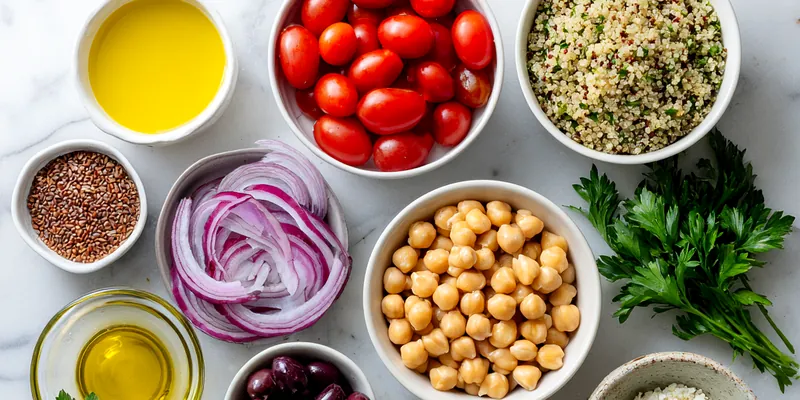
Why This Mediterranean Bowl Works
The magic of this Mediterranean Quinoa Power Bowl lies in its perfect balance of macronutrients and Mediterranean flavors. Quinoa provides complete protein with all nine essential amino acids, making it an ideal plant-based protein source. When combined with chickpeas, you're getting nearly 15 grams of protein per serving—enough to keep you satisfied for hours. The healthy fats from olive oil and feta help your body absorb the fat-soluble vitamins from the colorful vegetables, while the fiber content from the quinoa, chickpeas, and vegetables supports digestive health and stable blood sugar levels.
This bowl exemplifies the Mediterranean diet principle of eating the rainbow. Each color represents different phytonutrients: red and yellow peppers provide vitamin C and carotenoids, cucumbers offer hydration and silica for skin health, and parsley delivers vitamin K and antioxidants. The combination creates not just visual appeal but actual nutritional synergy, where the nutrients work together more effectively than they would in isolation. This is why Mediterranean cuisine has been consistently ranked as one of the world's healthiest dietary patterns.
💡 Professional Tip
Toast your quinoa in a dry pan for 2-3 minutes before cooking for a nuttier, more complex flavor that elevates the entire dish. This simple step adds depth without any additional ingredients or time.
Frequently Asked Questions
Absolutely! This Mediterranean Quinoa Power Bowl is perfect for meal prep. Store the cooked quinoa, prepared vegetables, and dressing separately in airtight containers for up to 4 days. Add the feta cheese just before serving to maintain its texture. The quinoa actually improves slightly after a day as it absorbs the flavors. You can also freeze the cooked quinoa for up to 3 months—just thaw overnight in the refrigerator before assembling your bowls.
Yes, this recipe is very adaptable. Brown rice, farro, bulgur, or couscous all work beautifully as alternatives. Brown rice will take longer to cook (about 40-45 minutes), while couscous cooks in just 5 minutes. Farro adds a wonderful chewy texture and takes about 25-30 minutes. Each grain brings its own unique texture and nutritional profile, so feel free to experiment based on what you have available or prefer.
The key to perfectly fluffy quinoa is the correct water ratio and not overcooking it. Use a 2:1 water-to-quinoa ratio and don't lift the lid while it's cooking. Once all the water is absorbed (about 15 minutes), remove from heat and let it steam with the lid on for 5 minutes. Then fluff with a fork—this releases steam and separates the grains. If your quinoa is consistently mushy, try reducing the water slightly to 1.75 cups per cup of quinoa.
There are many great alternatives to feta that maintain the Mediterranean character of this bowl. Goat cheese offers a similar tangy flavor with a creamier texture. For a dairy-free option, try nutritional yeast for a cheesy flavor, or use diced avocado for creaminess and healthy fats. Shaved Parmesan or crumbled goat cheese also work wonderfully. You could even add toasted pine nuts or sunflower seeds for a different textural element and additional protein.
Perfectly cooked quinoa should be tender with a slight bite, never mushy. You'll know it's done when all the liquid is absorbed and you can see the little spiral-shaped germ separating from the seed—this looks like a tiny tail on each grain. The quinoa should be fluffy and the grains should separate easily when you fluff with a fork. If there's still water in the pan after 15 minutes, cook for another 2-3 minutes uncovered to evaporate the excess liquid.
This Mediterranean bowl is a complete meal on its own, but if you want to round it out, serve with warm pita bread or naan for scooping. A side of hummus or tzatziki adds extra protein and Mediterranean flavor. For a heartier meal, add grilled chicken, salmon, or lamb kebabs on top. A simple side salad with lemon vinaigrette or some marinated artichoke hearts complement the bowl beautifully without overwhelming it.
Absolutely! This recipe is incredibly versatile. Cherry tomatoes add juicy bursts of flavor, roasted eggplant provides smokiness, blanched green beans add crunch, and baby spinach or arugula boost the greens. Roasted sweet potatoes or beets make it more substantial, while shaved fennel adds a delicate anise flavor. In summer, add fresh corn or zucchini; in fall, try roasted butternut squash. The key is maintaining color variety and textural contrast.
Store leftovers in airtight containers in the refrigerator for up to 4 days. For best results, keep the dressing separate and add just before eating to prevent the vegetables from becoming soggy. If you've already dressed the bowl, it will still be delicious for 2-3 days, though the vegetables will soften slightly. The quinoa may absorb the dressing over time, so you might want to add a fresh drizzle of olive oil and lemon juice when reheating or eating cold.
Recipe Troubleshooting Guide
Quinoa Is Bitter
Problem: Your quinoa tastes bitter or has an unpleasant flavor even after cooking.
Solution: Quinoa has a natural coating called saponin that tastes bitter. Always rinse quinoa thoroughly under cold running water for at least 30 seconds before cooking, even if the package says 'pre-rinsed.' Use a fine-mesh strainer and rub the grains gently with your hands. Some brands require more rinsing than others. Cooking quinoa in vegetable broth instead of water also helps mask any residual bitterness.
Bowl Is Too Dry
Problem: The assembled bowl feels dry and the ingredients don't come together.
Solution: You likely need more dressing. Make a double batch of the lemon-herb dressing and add it gradually until you achieve the right consistency. The quinoa absorbs dressing over time, especially if meal prepping. Before serving, add a tablespoon of extra virgin olive oil and a squeeze of fresh lemon juice. You can also add a dollop of Greek yogurt or tahini sauce for extra moisture and creaminess.
Chickpeas Are Bland
Problem: The chickpeas don't have much flavor and feel like an afterthought in the bowl.
Prevention: Toss the drained chickpeas with a tablespoon of olive oil, a pinch of smoked paprika, cumin, and salt, then roast them at 400°F for 15-20 minutes until slightly crispy. This adds incredible flavor and texture. Alternatively, sauté the chickpeas in a pan with garlic and herbs for 5 minutes before adding to the bowl. This extra step transforms them from bland to bold.
Vegetables Release Too Much Water
Problem: Your bowl becomes watery from the vegetables, especially cucumber, making the quinoa soggy.
Recovery: After dicing the cucumber, place it in a colander, sprinkle with a pinch of salt, and let it sit for 10 minutes. This draws out excess moisture. Pat dry with paper towels before adding to the bowl. For meal prep, keep cucumber separate and add just before serving. Also, ensure you're thoroughly draining the chickpeas and not adding them while wet. If assembling ahead, slightly underdress the bowl initially.
Flavors Don't Pop
Problem: The bowl tastes flat and one-dimensional despite using all the ingredients.
Prevention: Mediterranean food relies on layering flavors. First, season your quinoa with salt while cooking. Next, use fresh garlic in the dressing rather than garlic powder. Add a full tablespoon of fresh lemon juice for brightness. Don't skimp on the fresh herbs—dried herbs can't replicate the vibrant flavor of fresh parsley. Finally, finish with a pinch of flaky sea salt and freshly cracked black pepper right before serving. Each layer adds dimension.
Flavor Balance Issues
Too Sweet: If your bowl tastes unexpectedly sweet, it may be from sweet bell peppers or certain brands of chickpeas. Balance it with more lemon juice, red wine vinegar, or add more salty elements like olives or feta. A pinch of red pepper flakes adds heat that counteracts sweetness.
Too Salty: If too salty, likely from the olives, feta, or over-seasoning, add more unsalted quinoa or fresh vegetables to dilute. A squeeze of lemon juice or drizzle of honey can also balance excessive saltiness. Use less feta next time or opt for a lower-sodium variety.
Bland: Bland flavors usually mean insufficient seasoning or using dried herbs instead of fresh. Add more salt, fresh lemon juice, minced garlic, and fresh parsley. A drizzle of high-quality extra virgin olive oil and a sprinkle of za'atar or sumac can transform a bland bowl instantly.
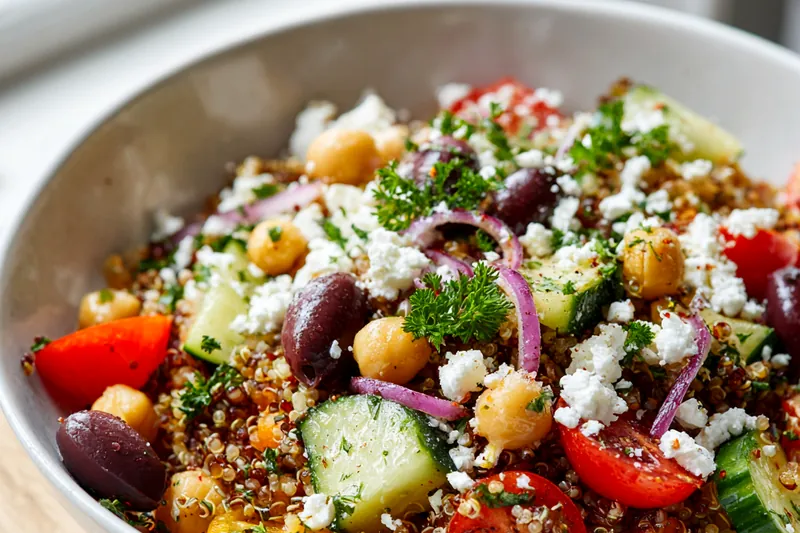
Choosing Quality Ingredients for Maximum Flavor
The quality of your ingredients directly impacts the final flavor of this Mediterranean bowl. Start with quinoa—look for grains that are uniform in size and color, with no debris or broken pieces. Tri-color quinoa (a mix of white, red, and black) is visually stunning and offers slightly varied textures and flavors, but standard white quinoa works perfectly well. For chickpeas, I prefer organic canned chickpeas in BPA-free cans, or you can cook dried chickpeas from scratch for superior texture and flavor. Always drain and rinse canned chickpeas to remove excess sodium and the starchy canning liquid.
Bell peppers should be firm, glossy, and heavy for their size with no soft spots or wrinkles. Choose different colors for visual impact—each color has a slightly different flavor profile, with red being the sweetest and green more bitter. English cucumbers are preferable to regular cucumbers because they have fewer seeds and thinner skins, eliminating the need to peel or seed them. For feta cheese, look for authentic Greek or French feta stored in brine—it has superior flavor and texture compared to pre-crumbled varieties. Quality extra virgin olive oil makes a huge difference in the dressing, so invest in a bottle you'd be happy to use for dipping bread.
Essential Ingredient Notes
- Quinoa Selection: Choose quinoa that's been stored properly—it should smell slightly nutty, never musty or rancid. Organic quinoa often has better flavor. Store in an airtight container in a cool, dark place for up to 6 months, or refrigerate for longer storage. Always rinse before cooking to remove the bitter saponin coating.
- Fresh vs. Dried Herbs: Fresh parsley is essential for this recipe—flat-leaf (Italian) parsley has more flavor than curly varieties. Fresh herbs should have vibrant color and no wilting or dark spots. Store with stems in water like a bouquet, covered loosely with plastic, for up to a week. Avoid dried parsley as it lacks the bright, fresh flavor needed here.
- Olive Selection: Kalamata olives from Greece are the gold standard—they're briny, meaty, and slightly fruity. Look for them in the refrigerated section or olive bar rather than canned. Pit them yourself if possible, as pre-pitted olives can have a metallic taste. If Kalamata olives aren't available, use any high-quality black Mediterranean olive, but avoid canned black olives which lack flavor complexity.
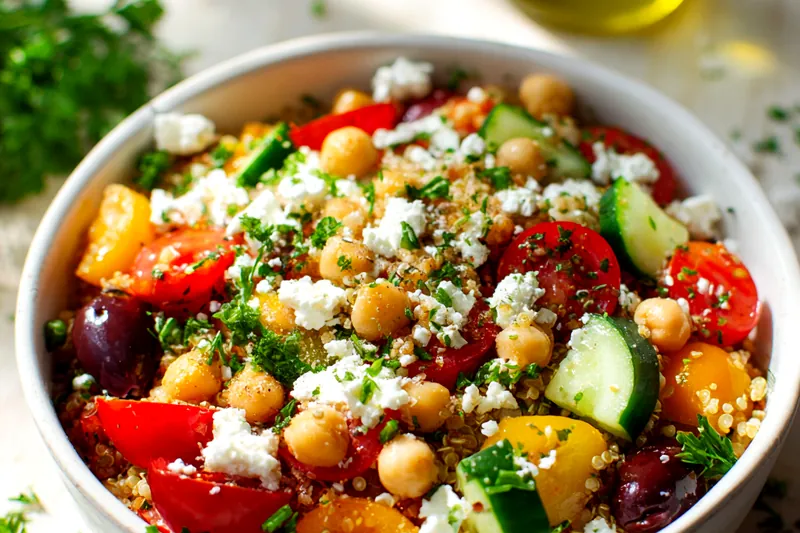
Mastering the Perfect Quinoa Bowl Technique
The foundation of any great grain bowl is perfectly cooked quinoa. The 2:1 liquid-to-quinoa ratio is crucial—too much water creates mush, too little leaves it undercooked and crunchy. After bringing to a boil, immediately reduce the heat to the lowest setting. Resist the urge to lift the lid during cooking, as this releases steam and disrupts the cooking process. The quinoa is ready when it's absorbed all the liquid and you can see the spiraling germ separating from each grain. The final 5-minute rest off heat allows the quinoa to finish steaming and firms up the texture.
When assembling your Mediterranean bowl, temperature matters. Room temperature or slightly warm quinoa absorbs the dressing better and releases more flavor than cold quinoa straight from the refrigerator. If meal prepping, bring the quinoa to room temperature before assembling, or warm it gently in the microwave. Build your bowl in layers—quinoa base, then vegetables arranged in sections, creating visual appeal. This presentation style, inspired by poke and Buddha bowls, lets each ingredient shine. Drizzle the dressing just before serving rather than tossing everything together, which allows people to customize their flavor intensity and keeps the vegetables crisp.
The Perfect Dressing Emulsion
Creating a properly emulsified dressing is key to distributing flavor throughout the bowl. In a small bowl, combine all dressing ingredients and whisk vigorously for 30 seconds until the mixture looks slightly thickened and creamy. The oil and vinegar should no longer separate immediately. For even better emulsification, put all dressing ingredients in a small jar with a tight lid and shake vigorously for 15 seconds. The lemon juice and vinegar's acidity helps break down the oil into tiny droplets, creating a smooth, cohesive dressing that clings to the quinoa and vegetables instead of pooling at the bottom of your bowl.
Mediterranean Quinoa Power Bowl
📋 Ingredients
Dressing Ingredients
- 3 tablespoons extra virgin olive oilUse high-quality EVOO for best flavor
- 2 tablespoons red wine vinegarCan substitute with white wine vinegar
- 1 tablespoon fresh lemon juiceFreshly squeezed is essential
- 2 cloves garlic, mincedFresh garlic, not jarred
- 1 teaspoon dried oreganoMediterranean oregano preferred
- 1/2 teaspoon sea saltAdjust to taste
- 1/4 teaspoon black pepperFreshly ground
Bowl Components
- 1 cup uncooked quinoaAny color works; tri-color is prettiest
- 2 cups water or vegetable brothBroth adds more flavor
- 1 can (15 oz) chickpeas, drained and rinsedPat dry for best texture
- 1 red bell pepper, dicedChoose firm, glossy peppers
- 1 yellow bell pepper, dicedOrange works too
- 1 English cucumber, dicedNo need to peel or seed
- 1/2 cup Kalamata olives, pitted and halvedGreek olives are best
- 1/2 cup crumbled feta cheeseLook for feta in brine
- 1/4 cup fresh parsley, choppedFlat-leaf has more flavor
Instructions
Cook the Quinoa
Rinse quinoa under cold water in a fine-mesh strainer. In a medium saucepan, combine quinoa and water (or broth for extra flavor). Bring to a boil, then reduce heat to low, cover, and simmer for 15 minutes until liquid is absorbed. Remove from heat and let stand covered for 5 minutes, then fluff with a fork.
Prepare the Vegetables
While quinoa cooks, dice the bell peppers and cucumber into bite-sized pieces. Halve the Kalamata olives and crumble the feta cheese. Chop the fresh parsley finely. Set all prepared ingredients aside in separate bowls.
Make the Dressing
In a small bowl, whisk together extra virgin olive oil, red wine vinegar, fresh lemon juice, minced garlic, dried oregano, salt, and black pepper until well combined and emulsified. Taste and adjust seasoning as needed.
Assemble the Bowls
Divide the cooked quinoa among four serving bowls. Top each with equal portions of chickpeas, diced bell peppers, cucumber, and Kalamata olives. Drizzle with the prepared dressing and toss gently to combine, or keep ingredients separate for a more composed presentation.
Garnish and Serve
Top each bowl with crumbled feta cheese and freshly chopped parsley. Serve immediately at room temperature, or refrigerate for up to 4 days for meal prep. Add an extra squeeze of lemon juice before serving if desired.
Recipe Notes & Tips
Storage
Store assembled bowls in airtight containers in the refrigerator for up to 4 days. For best results, keep dressing separate and add just before serving. Quinoa can be frozen for up to 3 months; thaw overnight in refrigerator before use. The bowl tastes great both cold and at room temperature.
Serving Suggestions
Serve with warm pita bread, naan, or grilled flatbread on the side. Add grilled chicken, salmon, shrimp, or lamb for extra protein. A dollop of tzatziki or hummus makes a delicious addition. Fresh lemon wedges on the side allow guests to adjust brightness to their preference.
Variations
Try roasted chickpeas instead of plain for extra crunch. Add cherry tomatoes, artichoke hearts, roasted red peppers, or baby spinach. Swap feta for goat cheese or use avocado for dairy-free. Replace quinoa with farro, bulgur, or brown rice. Add sun-dried tomatoes or roasted eggplant for more Mediterranean flair. Top with za'atar or sumac for authentic Middle Eastern spice.