Melt-In-Your-Mouth Cake (Magic Custard Cake)
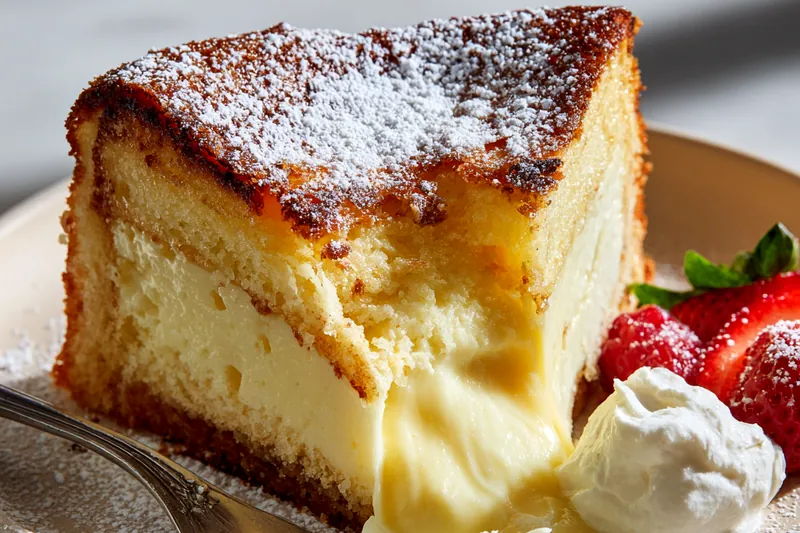
This Melt-In-Your-Mouth Cake is pure magic! As it bakes, one simple batter transforms into three distinct layers - a dense bottom, a silky custard center, and a light, cake-like top. The result is an impossibly tender dessert that literally melts on your tongue with every bite. Perfect for impressing guests or treating yourself to something special!


The Magic Behind This Self-Layering Cake
What makes this Melt-In-Your-Mouth Cake so special is its unique baking science. When you combine a very thin custard-based batter with stiffly beaten egg whites and bake at a moderate temperature, something remarkable happens. The egg whites rise to the top while the heavier custard settles to the bottom, and the middle transforms into a creamy, pudding-like layer. It's chemistry and physics working together to create three distinct textures from one simple mixture.
The key to success lies in temperature control and gentle handling. Your milk should be lukewarm (not cold, which would solidify the butter, and not hot, which would cook the eggs). Room temperature eggs separate more easily and whip to greater volume. When you fold the egg whites into the thin batter, resist the urge to make it smooth - the lumpy, streaky mixture is exactly what you want. During baking, the cake puffs dramatically as steam creates air pockets, then settles as it cools, leaving you with that signature sunken center filled with luscious custard.
💡 Professional Tip
The batter will look alarmingly thin and lumpy after folding in the egg whites - don't panic! This is exactly how it should be. If your batter is too thick, you won't get the proper layering effect. Trust the process and resist the temptation to overmix.
Frequently Asked Questions
Absolutely! This cake is actually delicious served either warm or chilled. You can bake it up to 2 days ahead and store it covered in the refrigerator. The custard layer will set more firmly when chilled, giving you cleaner slices. If you prefer it warm, simply bake it 2-3 hours before serving and let it cool slightly. It's best enjoyed the same day or next day for optimal texture.
Whole milk is strongly recommended for the best results. The fat content in whole milk contributes to the rich, creamy custard texture that makes this cake so special. Low-fat or skim milk will result in a thinner, less luxurious custard layer. If you must substitute, use 2% milk as a compromise, but the texture won't be quite as silky and indulgent.
If your cake didn't form distinct layers, the most common culprits are overmixing the egg whites into the batter (which deflates them too much) or using cold milk (which makes the batter too thick). Make sure your milk is lukewarm, fold the egg whites very gently in three additions, and accept that the batter will look thin and lumpy. Also check your oven temperature with a thermometer - baking at too high a temperature can cause the layers to set before they separate properly.
Yes, but be cautious with additions as they can affect the layering. You can add 2-3 tablespoons of cocoa powder mixed with the flour for a chocolate version, or add lemon zest to the egg yolk mixture for a citrus variation. Avoid adding ingredients that would make the batter heavier (like chocolate chips or fruit chunks) as they'll sink and disrupt the layering process. Extracts like almond, coconut, or lemon work beautifully without changing the texture.
The cake is done when the top is deeply golden brown and the edges are set, but the center still has a slight jiggle when you gently shake the pan - similar to checking a cheesecake or flan. A toothpick inserted into the edge should come out with just a few moist crumbs, while the center will still be quite wet (that's your custard layer!). The cake will puff dramatically during baking and should have risen about an inch above the pan rim. If the top starts browning too quickly, tent it loosely with foil for the last 10-15 minutes.
This cake is wonderful on its own with just a dusting of powdered sugar, but it pairs beautifully with fresh berries (especially raspberries or strawberries), a dollop of lightly sweetened whipped cream, or a scoop of vanilla ice cream. For an elegant presentation, serve it with a berry compote or a drizzle of caramel sauce. A cup of strong coffee or espresso makes the perfect accompaniment, as the slight bitterness balances the cake's sweetness.
You can use an 8-inch or 10-inch round pan, but you'll need to adjust the baking time. An 8-inch pan will be deeper and require 50-55 minutes, while a 10-inch pan will be shallower and bake in about 35-40 minutes. Avoid using pans smaller than 8 inches as the batter may overflow. Square pans work too - an 8x8-inch or 9x9-inch pan is perfect. Whatever pan you choose, make sure it's at least 2 inches deep to accommodate the puffing during baking.
Cover the cake tightly with plastic wrap or transfer slices to an airtight container and refrigerate for up to 3 days. The custard layer will become firmer when cold, making the cake easier to slice cleanly. You can serve it chilled directly from the fridge (my personal favorite!) or let it sit at room temperature for 20-30 minutes if you prefer a softer texture. This cake doesn't freeze well due to the high moisture content in the custard layer.
Recipe Troubleshooting Guide
Cake Sunk Too Much in Center
Problem: The entire center collapsed dramatically, leaving very thin edges or the cake looks like a crater.
Solution: This usually means your egg whites were overbeaten (becoming dry and grainy) or the batter was overmixed when folding them in. Beat egg whites only until stiff but still glossy peaks form, and fold very gently - it's okay if some white streaks remain. Also ensure your oven temperature isn't too high, as rapid rising followed by collapse is a sign of overbaking.
Cake is Rubbery or Dense
Problem: The entire cake has a tough, rubbery texture with no distinct custard layer.
Solution: This happens when the flour wasn't properly sifted (creating lumps that didn't dissolve) or when the batter was mixed too vigorously, developing too much gluten. Always sift your flour before adding it, and mix the batter just until combined. Also check that you measured flour correctly - too much flour will create a dense, heavy result. Use the spoon-and-level method rather than scooping directly from the bag.
Top Burned Before Center Cooked
Problem: The top is very dark brown or burned while the center is still too jiggly and undercooked.
Prevention: Your oven temperature is too high. Use an oven thermometer to verify your actual oven temperature - many ovens run 25°F hotter than the dial indicates. If the top is browning too quickly (check after 30 minutes), tent the cake loosely with aluminum foil for the remaining baking time. Position your oven rack in the center position, not too close to the top heating element.
Custard Layer is Too Thin or Nonexistent
Problem: The cake baked into one uniform texture without a distinct creamy custard middle layer.
Recovery: The batter was likely too thick, preventing proper layering. Make sure your milk is lukewarm (not cold) and that you're using whole milk, not low-fat. The batter should be very thin and pourable, almost like crepe batter with lumps of egg white. If your batter seems thick, you may have added too much flour or your eggs were too small - use large eggs as specified.
Cake Won't Release from Pan
Problem: The cake is sticking to the pan and breaking apart when you try to remove it.
Prevention: The custard layer is very delicate, so proper pan preparation is crucial. Always butter the pan generously AND line the bottom with parchment paper, then butter the paper too. Let the cake cool for at least 15 minutes before attempting to remove it - removing it too hot will cause it to fall apart. For easiest serving, you can also leave it in the pan and serve directly from there (especially nice with a cast iron skillet). If you must remove it, run a thin knife around the edges while it's still slightly warm, then invert onto a plate.
Flavor Balance Issues
Too Sweet: The cake is cloyingly sweet - reduce sugar to 2/3 cup (135g) next time and increase vanilla to 1 tablespoon for more depth. A pinch of extra salt also helps balance sweetness.
Too Salty: The cake tastes too salty - make sure you're using unsalted butter and only 1/4 teaspoon salt. If you accidentally used salted butter, omit the added salt entirely.
Bland: The cake lacks flavor depth - make sure you're using real vanilla extract, not imitation. Increase vanilla to 1 tablespoon or add 1 teaspoon of vanilla bean paste. Ensure your ingredients (especially butter and milk) are fresh and high-quality, as this simple cake really showcases their flavors.
Choosing the Right Ingredients for Perfect Results
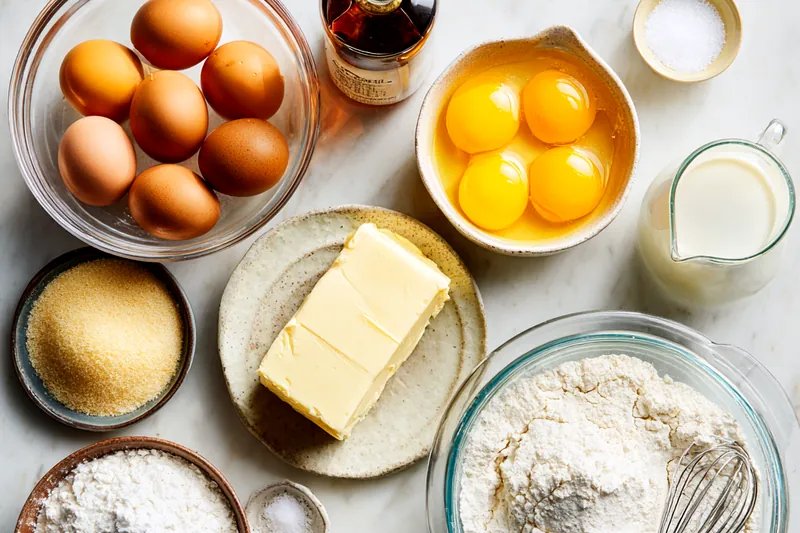
The beauty of this Melt-In-Your-Mouth Cake lies in its simplicity - just eight basic ingredients that you probably already have in your kitchen. However, quality matters tremendously when you're working with so few components. Fresh, large eggs at room temperature will separate cleanly and whip to maximum volume, creating those essential airy egg whites. Whole milk (not 2% or skim) provides the fat content necessary for a rich, silky custard layer. Real vanilla extract, not imitation, adds depth and warmth that complements the delicate egg custard flavor.
Your butter should be unsalted, which gives you control over the salt level and prevents the cake from tasting too savory. Let it cool slightly after melting - if it's too hot, it will cook the egg yolks when you mix them together. The flour must be all-purpose and properly sifted to avoid any lumps in your batter. Even small lumps can create dense pockets in the custard layer. Finally, that seemingly insignificant pinch of salt is crucial - it enhances all the other flavors and prevents the cake from tasting flat or one-dimensional.
Essential Ingredient Notes
- Eggs (Room Temperature): Use large eggs and bring them to room temperature for at least 30 minutes before baking. Room temperature eggs separate more easily and egg whites whip to greater volume. To quick-warm cold eggs, place them in a bowl of warm (not hot) water for 5-10 minutes. Fresh eggs (less than a week old) actually don't whip as well as slightly older eggs, so eggs that are 7-10 days old are ideal for this recipe.
- Whole Milk (Lukewarm): The milk temperature is critical - it should be lukewarm, about 100-105°F, just slightly warm to the touch. Too cold and it will solidify the melted butter, creating lumps. Too hot and it will scramble the egg yolks. Heat the milk gently in the microwave in 20-second intervals or on the stovetop over low heat, stirring frequently. Whole milk (3.25% fat) is non-negotiable for the proper creamy custard texture.
- Unsalted Butter (Melted & Cooled): Melt the butter completely, then let it cool for 5-10 minutes until it's warm but not hot (about 95-100°F). If the butter is too hot, it will cook the egg yolks when combined. European-style butter with higher fat content (82% vs. 80%) will give you an even richer result. Make sure you're using real butter, not margarine or spreads, as they contain water and emulsifiers that will affect the texture.
Mastering the Technique for Three Perfect Layers
The technique for this cake might seem counterintuitive at first - you're combining ingredients in a way that looks like a mistake but is actually precisely engineered for success. When you beat the egg whites to stiff peaks, you're incorporating air that wants to rise. When you create the thin custard base with egg yolks, milk, and flour, you're making a mixture that wants to sink. The gentle folding of these two completely different components creates a heterogeneous mixture that naturally separates during baking into three distinct layers: a dense bottom, a creamy middle, and a light top.
The folding technique is where most bakers either succeed or struggle. Your goal isn't to create a smooth, uniform batter - that would defeat the entire purpose. Instead, use a large spatula or whisk to gently lift and fold the egg whites into the thin batter in three separate additions. You should still see streaks of white when you're done, and the mixture will look lumpy and slightly curdled. This is exactly right! During baking, the heat sets the egg proteins while steam from the milk creates those magical layers. Patience is essential - open the oven door only in the last 10 minutes to check for doneness, as temperature fluctuations can cause the cake to fall prematurely.
The Gentle Fold Technique
Folding is the most crucial step in this recipe. Add the beaten egg whites to the thin batter in three additions. For each addition, use a large rubber spatula to scoop from the bottom of the bowl up through the center, then fold over the top. Rotate the bowl a quarter turn and repeat. Do this only 5-6 times per addition - you want to see white streaks and lumps throughout the batter. Over-folding will deflate the egg whites completely and you'll lose the layering effect. The batter should look almost curdled and definitely not smooth. Trust this method - it's been perfected through countless test batches!
Melt-In-Your-Mouth Cake (Magic Custard Cake)
📋 Ingredients
Wet Ingredients
- 4 large eggs, separated and at room temperatureSeparate carefully - even a drop of yolk will prevent whites from whipping properly. Save whites in a clean, dry bowl.
- 3/4 cup (150g) granulated sugar, dividedUse regular white sugar, not powdered or brown sugar which will affect texture.
- 1/2 cup (115g) unsalted butter, melted and slightly cooledShould be warm but not hot - about 95-100°F. Test by dipping your finger in; it should feel comfortable.
- 2 cups (480ml) whole milk, lukewarmTemperature is critical - heat to 100-105°F. Should feel just slightly warm to touch.
Dry Ingredients
- 3/4 cup (95g) all-purpose flour, siftedSift before measuring for accurate amount and lump-free batter. Spoon into cup and level off.
- 2 teaspoons pure vanilla extractUse real vanilla extract, not imitation. The flavor really shines in this delicate cake.
- 1/4 teaspoon saltEnhances all the other flavors. Fine sea salt or table salt work best.
- Powdered sugar for dustingFor serving - dust generously just before serving for the prettiest presentation.
Instructions
Prepare Pan and Oven
Preheat your oven to 325°F (160°C) - this moderate temperature is essential for proper layering. Generously butter a 9-inch round cake pan or cast iron skillet, making sure to get into all the corners. Cut a circle of parchment paper to fit the bottom, press it in, then butter the paper as well. This double-protection ensures easy release later. Set the prepared pan aside.
Beat Egg Whites to Stiff Peaks
In a completely clean, dry bowl (any grease or moisture will prevent proper whipping), beat the 4 egg whites with an electric mixer on medium-high speed. Start slowly, then increase speed as they become foamy. Beat for 3-4 minutes total until stiff, glossy peaks form - when you lift the beaters, the peaks should stand straight up without drooping. Don't overbeat or they'll become dry and grainy. Set aside while you make the custard base.
Make the Custard Batter Base
In a large mixing bowl, whisk the 4 egg yolks with 3/4 cup sugar for about 2 minutes until the mixture is pale yellow and creamy. Add the melted (but cooled) butter and vanilla extract, whisking until everything is well combined and smooth. Gradually add the sifted flour and salt, whisking constantly to prevent lumps. The mixture will be quite thick at this point. Now slowly pour in the lukewarm milk while whisking continuously - the batter will become very thin, almost like crepe batter. This thin consistency is exactly what you want for the layering to work properly.
Gently Fold in Egg Whites
This is the most important step! Add the beaten egg whites to the thin custard batter in three separate additions. For each addition, use a large rubber spatula to gently fold: scoop from the bottom, lift up through the center, and fold over the top. Rotate the bowl and repeat only 5-6 times per addition. The mixture will look very thin, lumpy, and streaky with visible white clumps - this is perfect! Don't try to make it smooth or you'll deflate the egg whites and lose the layering effect. The final batter should look almost curdled.
Bake Until Golden and Jiggly
Carefully pour the very thin batter into your prepared pan - it will look alarmingly liquidy. Place in the preheated 325°F oven and bake for 45-50 minutes without opening the door. The cake will puff dramatically, rising an inch or more above the pan rim. It's done when the top is deeply golden brown and the edges are set, but the center still has a gentle jiggle when you shake the pan (that's your custard layer). If the top browns too quickly after 35 minutes, tent loosely with foil. The cake will deflate as it cools - this is normal and expected.
Cool and Serve
Remove from oven and let the cake cool in the pan on a wire rack for at least 15 minutes. It will continue to settle and the custard will set slightly as it cools. For easiest serving, leave it in the pan (especially nice with cast iron). Or, run a thin knife around the edges and carefully invert onto a serving plate. Dust generously with powdered sugar just before serving - use a fine-mesh sieve for an even coating. Serve warm for a soft, pudding-like center, or chill for 2-4 hours for firmer, cleaner slices. Both ways are absolutely delicious!
Recipe Notes & Tips
Storage
Store leftover cake covered tightly with plastic wrap or in an airtight container in the refrigerator for up to 3 days. The custard layer will firm up when cold, making the cake easier to slice cleanly. You can serve it chilled or let it sit at room temperature for 20-30 minutes before serving. This cake is best enjoyed within 2 days for optimal texture and doesn't freeze well due to the high moisture content of the custard layer.
Serving Suggestions
This cake is wonderful on its own with a simple dusting of powdered sugar, but it's also delicious served with fresh berries (especially raspberries, strawberries, or blueberries), a dollop of lightly sweetened whipped cream, or a scoop of vanilla ice cream. For an elegant presentation, drizzle with berry coulis or caramel sauce. Serve with strong coffee or espresso to balance the sweetness. The cake can be served warm (soft and custardy) or chilled (firmer texture).
Variations
Chocolate Version: Add 2-3 tablespoons unsweetened cocoa powder mixed with the flour. Lemon Version: Add 2 tablespoons lemon zest to the egg yolk mixture and replace vanilla with 1 teaspoon lemon extract. Coconut Version: Replace vanilla with coconut extract and sprinkle toasted coconut on top after baking. Coffee Version: Add 2 teaspoons instant espresso powder dissolved in the milk. Always maintain the basic proportions to ensure proper layering occurs during baking.