One Pan Chicken & Potatoes
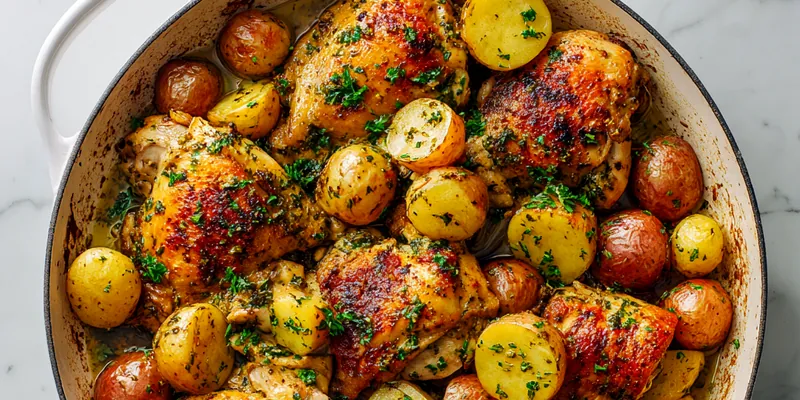
This One Pan Chicken & Potatoes is the answer to busy weeknight dinners when you want something delicious without hours in the kitchen. Crispy-skinned chicken thighs roast alongside golden potatoes, creating a complete meal in one pan with minimal cleanup. The best part is how the potatoes soak up all the flavorful chicken drippings as everything cooks together.

Why This One Pan Method Works
The secret to perfect one pan chicken and potatoes lies in understanding how different proteins and vegetables cook. Chicken thighs are forgiving and stay juicy even at high temperatures, making them ideal for roasting alongside potatoes. The high heat of 425°F creates crispy chicken skin while allowing enough time for the potatoes to become tender and golden. Unlike chicken breasts which dry out easily, thighs have enough fat to keep them moist during the longer cooking time needed for the potatoes.
Placing the chicken on top of the potatoes isn't just about space efficiency. As the chicken cooks, its flavorful juices and rendered fat drip down onto the potatoes below, essentially basting them throughout cooking. This creates potatoes with incredible flavor that taste like they've been cooked in chicken stock. The key is not overcrowding the pan, which allows hot air to circulate and creates those crispy edges we're after on both the chicken and potatoes.
💡 Professional Tip
Always start with completely dry chicken skin. Any moisture prevents crisping and creates steam instead. Pat the chicken thoroughly with paper towels and let it sit at room temperature for 15-20 minutes before cooking for the crispiest results.
Frequently Asked Questions
You can prep the ingredients ahead by seasoning the chicken and cutting the potatoes up to 24 hours in advance. Store them separately in the refrigerator. When ready to cook, let the chicken sit at room temperature for 15 minutes before roasting for even cooking. The dish is best served fresh from the oven when the skin is at its crispiest, but leftovers reheat well in a 375°F oven for 15-20 minutes.
While you can use chicken breasts, thighs are recommended because they stay juicier during the longer cooking time needed for the potatoes. If using breasts, add them to the pan 10-15 minutes after the potatoes start cooking, and cook until they reach 165°F internal temperature. You may need to remove the chicken before the potatoes are fully done and tent it with foil to keep warm.
For crispier potatoes, make sure they're cut side down on the pan and not overlapping. After the chicken is done, you can remove it and tent with foil while placing the potatoes under the broiler for 2-3 minutes. Another trick is to parboil the potatoes for 5 minutes before roasting, then rough up the edges with a fork before tossing with oil for extra crispy texture.
Baby potatoes work best because they're uniform in size and cook evenly, but you can use Yukon Gold or red potatoes cut into 1.5-inch chunks. Avoid russet potatoes as they tend to fall apart. If using larger potatoes, cut them slightly smaller than you think to ensure they're done when the chicken is ready. Sweet potatoes also work wonderfully and add a touch of sweetness to the dish.
The chicken is done when the internal temperature reaches 175°F in the thickest part of the thigh (not touching bone) and the juices run clear. The skin should be deep golden brown and crispy. Potatoes are ready when they're easily pierced with a fork and have golden brown edges. If the chicken is done but potatoes need more time, remove the chicken and continue cooking the potatoes.
This is a complete meal on its own, but it pairs beautifully with a simple green salad with vinaigrette, steamed green beans, roasted Brussels sprouts, or sautéed spinach with garlic. For a heartier meal, add dinner rolls or crusty bread to soak up the pan juices. A light coleslaw or cucumber salad provides a refreshing contrast to the rich chicken and potatoes.
Absolutely! Carrots, halved Brussels sprouts, and quartered onions work well because they have similar cooking times to potatoes. Add them to the pan with the potatoes at the beginning. Quicker-cooking vegetables like bell peppers or cherry tomatoes should be added halfway through cooking. Just make sure not to overcrowd the pan, which prevents proper browning.
Store leftover chicken and potatoes in an airtight container in the refrigerator for up to 4 days. To reheat, place in a 375°F oven for 15-20 minutes until heated through. This method helps restore some crispiness to the skin. You can also reheat in a skillet over medium heat, starting skin-side down. Avoid microwaving if possible as it makes the skin soggy. Leftovers make excellent meal prep lunches.
Recipe Troubleshooting Guide
Chicken Skin Not Crispy
Problem: The chicken skin stays soft and rubbery instead of getting crispy and golden.
Solution: This happens when the chicken wasn't dried properly before cooking. Always pat the chicken completely dry with paper towels and let it air dry in the fridge for an hour if possible. Make sure your oven is fully preheated to 425°F before the pan goes in. Don't overcrowd the pan, which creates steam. If the skin is still soft after cooking, run it under the broiler for 2-3 minutes, watching carefully.
Potatoes Undercooked When Chicken Is Done
Problem: The chicken reaches temperature but the potatoes are still hard in the center.
Solution: Cut your potatoes smaller - they should be no larger than 1.5 inches. You can also parboil the potatoes for 5 minutes before roasting to give them a head start. If this happens during cooking, remove the chicken and tent with foil while continuing to roast the potatoes for another 10-15 minutes, or increase oven temperature to 450°F.
Dry Chicken
Problem: The chicken comes out dry and stringy instead of juicy and tender.
Prevention: Don't overcook - use a meat thermometer and remove chicken at 175°F for thighs. Bone-in, skin-on thighs are much more forgiving than breasts. Make sure you're using enough oil on both the chicken and potatoes. Let the chicken rest for 5 minutes after cooking so juices redistribute. If using chicken breasts, reduce cooking time significantly or add them later in the process.
Burnt Potatoes on Bottom
Problem: The potato edges touching the pan get too dark or burnt while the rest cooks.
Recovery: Make sure the pan isn't too small - potatoes need space to roast rather than steam. Use enough oil to coat them well (about 2 tablespoons). If your oven runs hot, reduce temperature to 400°F and cook a bit longer. You can also line the pan with parchment paper, though you'll lose some of the crispy bottom texture. Stir the potatoes once halfway through if burning is a consistent issue.
Uneven Cooking
Problem: Some pieces are perfect while others are undercooked or overcooked.
Prevention: This usually means pieces are different sizes. Cut all potatoes to uniform size - about 1 to 1.5 inches. Use chicken thighs of similar size, or if they vary, place larger pieces toward the outside of the pan where heat is more intense. Rotate the pan 180 degrees halfway through cooking if your oven has hot spots. Make sure potatoes aren't stacked or overlapping.
Flavor Balance Issues
Too Sweet: If accidentally using sweet paprika and the dish tastes too sweet, balance with a squeeze of fresh lemon juice and a pinch of cayenne pepper. Add more salt and black pepper to bring savory notes forward.
Too Salty: If too salty, serve with unsalted sides like plain rice or a fresh salad. Squeeze lemon juice over the dish to brighten and distract from saltiness. For next time, reduce salt to 1/2 teaspoon and taste before adding more.
Bland: If lacking flavor, it likely needs more salt and acid. Squeeze fresh lemon over everything and sprinkle with flaky sea salt. Add more fresh herbs like parsley, thyme, or rosemary. A drizzle of good olive oil at the end also enhances flavor. Make sure to season generously before cooking next time.
Choosing the Best Ingredients
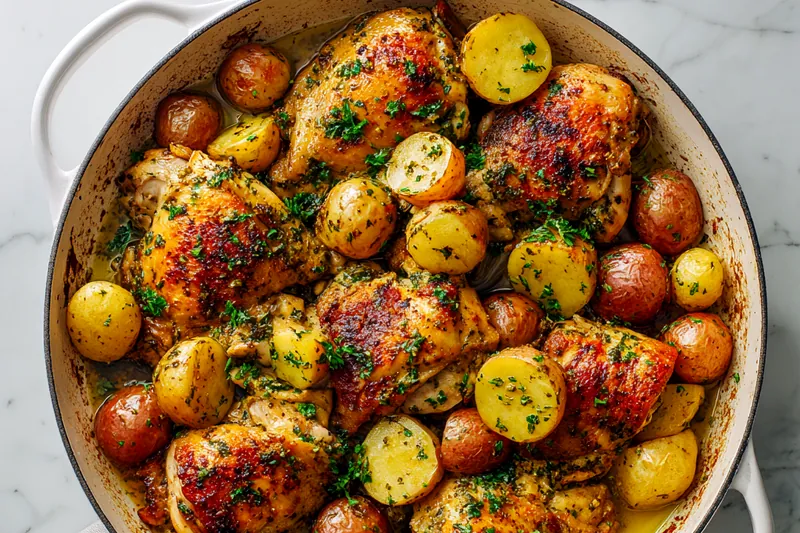
The quality of your chicken makes a significant difference in this dish. Look for chicken thighs with skin that's taut and creamy white or yellow, not gray. The meat should be pink and firm to the touch. Organic or free-range chicken will have more flavor, but any quality chicken thighs work well. Bone-in, skin-on is essential here - the bone helps the meat stay juicy during roasting, and the skin becomes deliciously crispy while protecting the meat underneath from drying out.
For potatoes, baby potatoes or small Yukon Golds are ideal because they have a creamy texture that holds up to roasting. Look for potatoes that are firm without any soft spots, sprouting, or green coloring. The thin skin on baby potatoes doesn't need peeling and becomes deliciously crispy in the oven. Choose potatoes of similar size so they cook evenly - if some are larger, cut them into smaller pieces to match the others. Fresh herbs elevate this dish significantly, but quality dried herbs work well too if that's what you have on hand.
Essential Ingredient Notes
- Chicken Thighs: Always choose bone-in, skin-on thighs for maximum flavor and juiciness. The bones add depth and help the meat stay tender during the longer cooking time. Pat them very dry before seasoning to ensure crispy skin. Room temperature chicken cooks more evenly than cold chicken straight from the fridge.
- Baby Potatoes: Select firm potatoes about 1.5 inches in diameter so they cook in the same time as the chicken. Red, yellow, or white varieties all work well. Don't skip cutting them in half - the cut side gets crispy and caramelized while the skin side stays creamy. Scrub them well but don't peel for better texture and nutrition.
- Olive Oil: Use regular olive oil rather than extra virgin for roasting at high heat. You need enough to coat everything well - skimping on oil leads to dry potatoes and less crispy chicken skin. The oil helps conduct heat, promotes browning, and carries the flavors of the herbs and spices throughout the dish.
Mastering the Roasting Technique
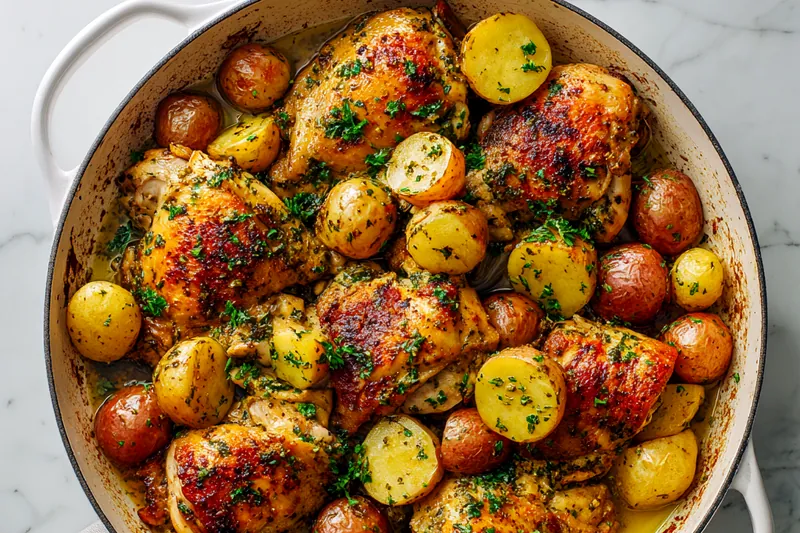
The key to perfect one pan roasting is understanding heat distribution and moisture management. Starting with a fully preheated oven at 425°F ensures immediate heat contact, which is crucial for crispy skin. The high temperature allows the chicken fat to render properly while creating that golden, crispy exterior we're after. Meanwhile, the potatoes have enough time to become tender inside while developing crispy, caramelized edges. Using a rimmed baking sheet or roasting pan allows air circulation around the food, preventing steaming which would make everything soggy.
Proper arrangement in the pan is just as important as temperature. Place potatoes cut-side down directly on the pan surface for maximum contact and crispiness. Nestle the chicken pieces among the potatoes rather than crowding them all to one side - this ensures even cooking and allows the chicken drippings to flavor the potatoes below. Don't overlap pieces or the parts touching won't brown. If your pan is too small, use two pans rather than crowding. The final rest period is crucial - it allows the chicken juices to redistribute, ensuring every bite is juicy and flavorful rather than dry.
The Perfect Crispy Skin Method
Achieving restaurant-quality crispy chicken skin at home requires three key steps: thoroughly drying the skin, seasoning under and over the skin, and cooking at the right temperature. Pat the chicken completely dry with paper towels, then let it air dry in the refrigerator for 30-60 minutes if time allows. This removes surface moisture that would otherwise create steam. Season generously, getting some spices under the skin directly on the meat for maximum flavor. The high heat of 425°F renders the fat under the skin while crisping the outer layer. Resist the urge to flip the chicken - keeping it skin-side up the entire time ensures that crispy texture we're after.
One Pan Chicken & Potatoes
📋 Ingredients
For the Chicken & Seasoning
- 2 teaspoons garlic powderProvides savory depth without burning like fresh garlic might
- 2 teaspoons paprikaUse regular or smoked paprika for color and mild flavor
- 1 teaspoon dried thymeClassic herb pairing with chicken and potatoes
- 1 teaspoon dried rosemaryCrush between your fingers to release oils before adding
- 1 teaspoon salt, dividedUse 3/4 tsp for chicken, 1/4 tsp for potatoes
- 1/2 teaspoon black pepperFreshly ground provides the best flavor
- 1/2 teaspoon onion powderAdds savory sweetness to the spice blend
For the Potatoes
- 6 bone-in, skin-on chicken thighs (about 2.5 lbs)Pat completely dry for crispiest skin
- 2 pounds baby potatoes, halvedChoose similar sizes for even cooking
- 3 tablespoons olive oil, divided2 tbsp for potatoes, 1 tbsp to drizzle over pan
- 3 cloves garlic, mincedFresh garlic adds aromatic flavor to potatoes
- 2 tablespoons fresh parsley, choppedFor garnish - adds fresh color and flavor
- 1 lemon, cut into wedgesFor serving - brightens the rich flavors
Instructions
Prepare and Season Chicken
Preheat oven to 425°F. Pat chicken thighs completely dry with paper towels - this is crucial for crispy skin. In a small bowl, mix together garlic powder, paprika, thyme, rosemary, 3/4 teaspoon salt, black pepper, and onion powder. Rub the spice mixture all over the chicken thighs, making sure to get some under the skin for maximum flavor penetration.
Prepare Potatoes
In a large bowl, toss halved potatoes with 2 tablespoons olive oil, minced garlic, and remaining 1/4 teaspoon salt until evenly coated. Spread potatoes in a single layer on a large rimmed baking sheet or roasting pan (about 13x18 inches), arranging them cut side down for maximum crispiness and caramelization.
Arrange Chicken on Pan
Drizzle the remaining 1 tablespoon olive oil over the arranged potatoes. Nestle the seasoned chicken thighs among the potatoes, placing them skin side up and making sure they're not overcrowded. The chicken should sit on top of some potatoes so the flavorful juices drip down during cooking. Leave a little space between each piece for proper air circulation.
Roast Until Golden
Roast in the preheated oven for 40-45 minutes, until the chicken skin is deep golden brown and crispy and the internal temperature reaches 175°F when tested in the thickest part of the thigh. The potatoes should be tender when pierced with a fork and golden brown on the edges. If chicken is done but potatoes need more time, remove chicken and continue cooking potatoes.
Rest and Serve
Remove the pan from the oven and let rest for 5 minutes - this allows the juices to redistribute throughout the chicken. Sprinkle fresh chopped parsley over everything for color and freshness. Serve immediately with lemon wedges on the side for squeezing over the chicken and potatoes. The pan juices make a delicious light sauce to drizzle over everything.
Recipe Notes & Tips
Storage
Store leftover chicken and potatoes in separate airtight containers in the refrigerator for up to 4 days. Reheat in a 375°F oven for 15-20 minutes to restore crispiness, or in a skillet over medium heat starting skin-side down. Can be frozen for up to 3 months, though the chicken skin won't be as crispy after thawing and reheating.
Serving Suggestions
This dish is a complete meal on its own, but pairs beautifully with a simple green salad, steamed green beans, or roasted vegetables. Serve with crusty bread to soak up the flavorful pan juices. For a Mediterranean twist, serve with tzatziki sauce or a dollop of Greek yogurt mixed with herbs.
Variations
Try adding halved Brussels sprouts, baby carrots, or quartered onions to the pan with the potatoes. For a spicy version, add 1/2 teaspoon cayenne pepper to the spice mix. Swap herbs for Italian seasoning, herbs de Provence, or a Cajun spice blend. You can also use bone-in chicken drumsticks or a mix of thighs and drumsticks for variety.