Roasted Tomato and Garlic Ricotta Pasta
Creamy roasted tomato and garlic ricotta pasta with caramelized cherry tomatoes, fresh herbs, and velvety ricotta sauce. Simple, elegant comfort food.

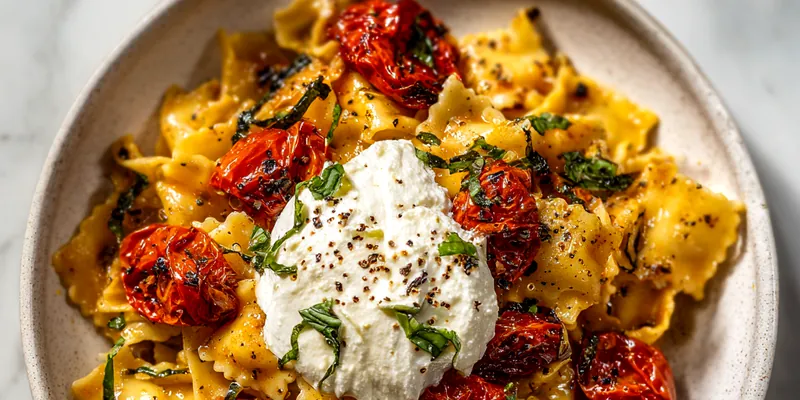
The Magic of Roasted Tomatoes
Roasting transforms ordinary cherry tomatoes into concentrated bursts of sweet, tangy flavor. The high heat caramelizes their natural sugars while intensifying their umami notes. As the tomatoes burst and release their juices, they create a naturally silky sauce that requires no additional cooking or reduction.
The garlic cloves roast alongside the tomatoes, becoming sweet, mellow, and buttery soft. This roasted garlic adds depth without the harsh bite of raw garlic, creating a sophisticated flavor profile that perfectly complements the creamy ricotta base.
💡 Professional Tip
Don't skip reserving pasta cooking water - the starchy liquid is essential for creating a silky, cohesive sauce that clings to every piece of pasta. Add it gradually while tossing to achieve the perfect creamy consistency.
Frequently Asked Questions
Cherry tomatoes work best because they roast quickly and have concentrated sweetness. If using regular tomatoes, cut them into small wedges and increase roasting time by 5-10 minutes.
Use whole milk ricotta for the creamiest, richest results. Fresh ricotta from an Italian market or deli is ideal, but quality supermarket ricotta works well too. Avoid low-fat versions as they can be grainy.
This pasta is best served immediately for optimal creaminess. However, you can roast the tomatoes and garlic up to 2 days ahead and store refrigerated. Reheat gently before tossing with freshly cooked pasta and ricotta.
Short tubular pasta like rigatoni, penne, or mezze rigatoni are ideal as they catch the sauce and tomatoes. Long pasta like spaghetti or linguine also works beautifully. Choose shapes with texture that helps sauce adhere.
Use room temperature ricotta and add hot pasta water gradually while whisking. The heat and starchy water help emulsify the ricotta into a smooth, creamy sauce. Don't cook the ricotta directly - just toss with hot pasta.
Absolutely! Add grilled chicken, Italian sausage, shrimp, or white beans. For vegetarian protein, try chickpeas or lentils. Add cooked protein when folding in the roasted tomatoes.
Yes, this recipe is vegetarian. For a vegan version, substitute ricotta with cashew cream, use nutritional yeast instead of Parmesan, and omit the butter.
Store in an airtight container for up to 3 days. Reheat gently on the stovetop with a splash of milk, cream, or pasta water to restore creaminess. Microwave reheating works but may require extra liquid.
Recipe Troubleshooting Guide
Dry, Clumpy Sauce
Problem: Pasta sauce is dry and ricotta looks clumpy
Solution: Add more reserved pasta water, a tablespoon at a time, while tossing vigorously. The starch helps emulsify the ricotta. Add a pat of butter or drizzle of olive oil for extra silkiness.
Bland Flavor
Problem: Pasta lacks depth and tastes flat
Solution: Season generously with salt at each step. Add more lemon juice or zest for brightness. Ensure pasta water is well-salted. Finish with high-quality olive oil and fresh cracked pepper.
Watery Sauce
Problem: Sauce is too thin and won't coat pasta
Prevention: Use less pasta water initially - you can always add more. Cook pasta 1 minute less than package directions so it absorbs more sauce. Toss pasta longer to help it absorb liquid.
Burnt Tomatoes
Problem: Tomatoes or garlic burned during roasting
Recovery: Reduce oven temperature to 375°F and roast longer. Ensure tomatoes are well-coated with oil. Check halfway through and stir if browning unevenly. Use a rimmed baking sheet to contain juices.
Grainy Ricotta
Problem: Ricotta has a grainy, separated texture
Prevention: Use high-quality whole milk ricotta. Bring ricotta to room temperature before using. Whisk thoroughly before adding pasta. Add pasta water gradually while whisking to create smooth emulsion.
Flavor Balance Issues
Too Sweet: Add more red pepper flakes, black pepper, or a splash of red wine vinegar
Too Salty: Add more ricotta, lemon juice, or serve with extra fresh basil and tomatoes
Bland: Increase garlic, add more Parmesan, finish with high-quality olive oil and lemon zest
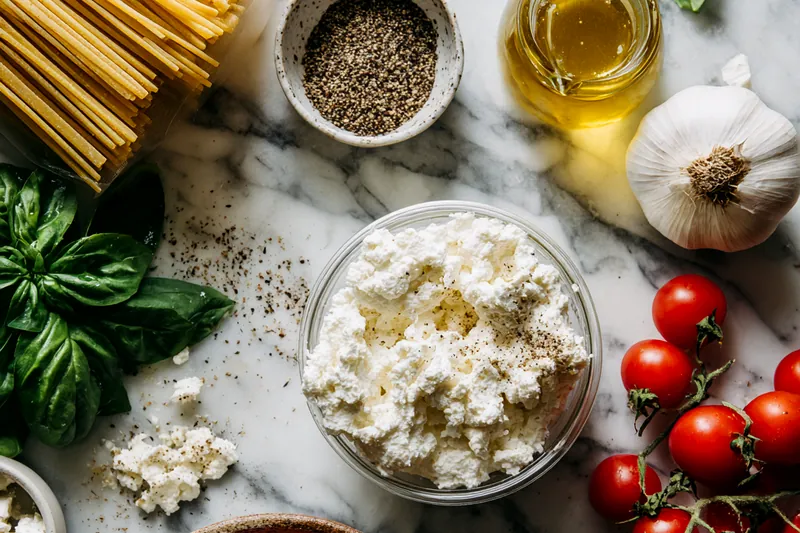
Selecting Quality Ingredients
The simplicity of this dish means ingredient quality is paramount. Choose ripe, sweet cherry tomatoes that are firm but give slightly when pressed. In-season tomatoes make the biggest difference, but good quality year-round cherry tomatoes roast beautifully and develop concentrated sweetness.
Fresh, whole milk ricotta is non-negotiable for the creamiest results. Look for ricotta with a short ingredient list - just milk, cream, salt, and acid. Freshly grated Parmesan adds nutty depth, while high-quality extra virgin olive oil provides fruity, peppery notes that tie everything together.
Essential Ingredient Notes
- Cherry Tomatoes: Choose tomatoes that are firm, brightly colored, and similar in size for even roasting. Sweet varieties like Sungold or Sweet 100s are exceptional but any ripe cherry tomatoes work well.
- Ricotta Quality: Seek out fresh ricotta from Italian markets or specialty stores. Avoid ricotta that's watery or has gums and stabilizers. Drain excess liquid before using if needed.
- Fresh Herbs: Use fresh basil and parsley for the brightest flavor. Add most herbs at the end to preserve their vibrant color and fresh taste. Save some basil for garnish.
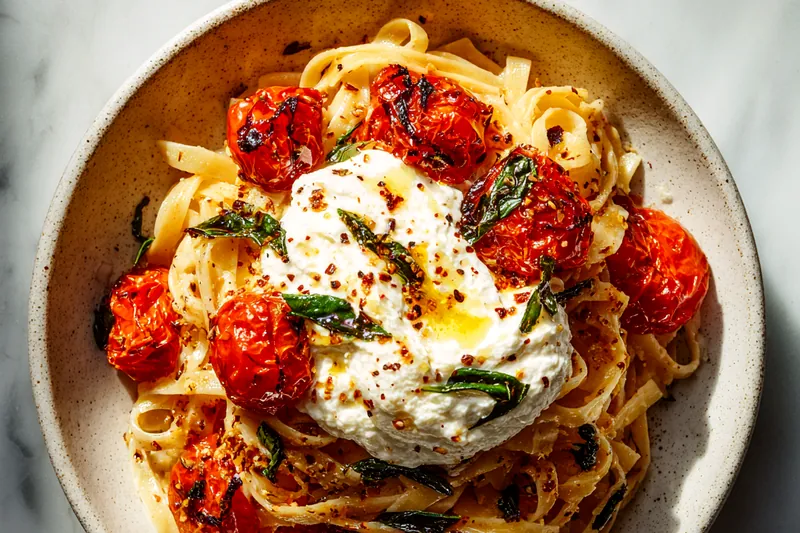
Mastering the Technique
The key to perfect ricotta pasta is creating an emulsion between the cheese and pasta water. Start with room temperature ricotta whisked until smooth, then add hot pasta water gradually while tossing. The heat helps the ricotta become silky and fluid, while the starchy pasta water acts as a binder.
Timing is crucial - have your ricotta mixture ready in a large warm bowl before draining the pasta. Toss the hot pasta with ricotta immediately, then add the roasted tomatoes with all their flavorful juices. The residual heat brings everything together without cooking the delicate ricotta.
Creating the Perfect Emulsion
Add pasta water to ricotta gradually while whisking vigorously. The starch in the water helps create a smooth, cohesive sauce. Keep tossing the pasta in the sauce until it becomes glossy and creamy, adding more water as needed.
Roasted Tomato and Garlic Ricotta Pasta
📋 Ingredients
For the Roasted Tomatoes
- 400g whole milk ricotta cheeseMust be room temperature
- 60g freshly grated ParmesanGrate from a block for best flavor
- Zest of 1 lemonAdds brightness
- 30ml fresh lemon juiceBalances richness
- 120ml pasta cooking waterCreates creamy emulsion
- 1 cup fresh basil, tornAdd at the end for freshness
- ¼ cup fresh parsley, choppedAdds color and herbaceous notes
- 60g butter (optional)For extra richness
For the Ricotta Sauce and Pasta
- 450g pasta (rigatoni or penne)Short shapes work best
- 680g cherry tomatoes, halvedRoast for concentrated flavor
- 12 cloves garlic, smashedBecomes sweet when roasted
- 90ml extra virgin olive oilUse quality oil for best flavor
- 1 tsp red pepper flakesAdjust to taste for heat
- 1 tsp dried oreganoTraditional Italian flavor
- Salt and black pepperSeason generously at each step
Instructions
Roast Tomatoes and Garlic
Preheat oven to 400°F (200°C). On a large rimmed baking sheet, toss cherry tomatoes and smashed garlic cloves with olive oil, oregano, red pepper flakes, salt, and black pepper. Spread in a single layer. Roast for 25-30 minutes until tomatoes are bursting and caramelized, and garlic is golden and soft. Remove from oven and gently mash some tomatoes with a fork to release their juices.
Cook Pasta
While tomatoes roast, bring a large pot of salted water to a boil. Cook pasta according to package directions until al dente. Reserve 1½ cups pasta cooking water before draining.
Prepare Ricotta Mixture
In a large serving bowl, combine ricotta cheese, Parmesan, lemon zest, lemon juice, and a generous pinch of salt and pepper. Whisk together until smooth and creamy.
Combine Pasta and Sauce
Add hot drained pasta to the ricotta mixture along with ½ cup of reserved pasta water. Toss vigorously to create a creamy sauce that coats the pasta. Add the roasted tomatoes and garlic (with all the pan juices) and gently fold together. Add more pasta water as needed to achieve desired creaminess. Stir in butter if using for extra richness.
Finish and Serve
Fold in torn basil and chopped parsley. Taste and adjust seasoning with salt, pepper, or lemon juice. Serve immediately in warm bowls, topped with extra Parmesan, fresh basil, a drizzle of olive oil, and cracked black pepper. Serve with crusty bread.
Recipe Notes & Tips
Storage
Store leftovers in an airtight container in the refrigerator for up to 3 days. Reheat gently on the stovetop with a splash of milk or pasta water to restore creaminess. The pasta will absorb sauce as it sits.
Serving Suggestions
Serve with crusty Italian bread, a simple arugula salad with lemon vinaigrette, or roasted vegetables. A glass of crisp white wine like Pinot Grigio or Vermentino pairs beautifully.
Variations
Add sun-dried tomatoes for extra depth, substitute burrata for ricotta for ultra-creaminess, or stir in baby spinach or arugula with the hot pasta. Try adding crispy pancetta or Italian sausage for a heartier dish.