The Absolute Best Thanksgiving Stuffing
This Thanksgiving stuffing is everything a holiday side dish should be - crispy golden edges on top, perfectly moist and tender inside, and bursting with savory herb flavor. Using a combination of fresh sage, thyme, and parsley along with aromatic sautéed vegetables, this classic recipe creates the stuffing that everyone requests year after year. Whether you call it stuffing or dressing, this version delivers the perfect texture and flavor balance that makes it an absolute standout on your holiday table.

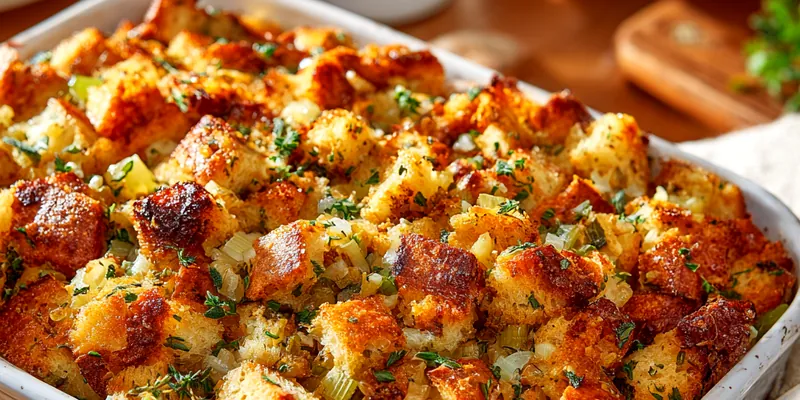
Why This Stuffing Recipe Works
The key to exceptional stuffing lies in understanding moisture balance and texture contrast. This recipe uses dried-out bread cubes that act like little sponges, absorbing the flavorful broth and butter mixture while maintaining enough structure to create varied textures throughout the dish. By intentionally drying the bread in the oven first, we ensure that it won't become mushy or lose its shape during baking. The bread cubes on top get gloriously crispy and golden, while those in the middle stay tender and moist - this textural variety is what makes great stuffing truly memorable.
The herb combination in this recipe isn't random - sage, thyme, and parsley work together to create the classic Thanksgiving flavor profile that we all crave during the holidays. Sage provides that distinctive savory, slightly peppery note that's synonymous with Thanksgiving, while thyme adds an earthy depth. Fresh parsley brightens everything up and prevents the dish from feeling too heavy. The aromatics - onion, celery, and garlic - are sautéed in butter until softened, which concentrates their flavors and removes any harsh raw notes. This creates a flavor foundation that permeates every bite of the finished stuffing.
💡 Professional Tip
For the crispiest top layer, dot small pieces of additional butter across the surface of the stuffing before the final uncovered baking period. This extra butter will melt and create irresistible golden-brown, crunchy spots that add both flavor and textural contrast.
Frequently Asked Questions
Yes! You can prepare the stuffing up to 24 hours in advance. Complete all steps through combining the ingredients, then cover tightly and refrigerate. When ready to bake, bring it to room temperature for 30 minutes (this ensures even cooking), then bake as directed, adding an extra 5-10 minutes to the covered baking time if it's still cold in the center. The texture is actually better when made ahead, as the bread has more time to absorb all the flavors.
Absolutely! While sourdough and French bread provide excellent flavor and texture, you can use Italian bread, challah, ciabatta, or even a rustic whole wheat bread. The key is using a sturdy, crusty bread with good structure - avoid soft sandwich bread as it becomes too mushy. Day-old or slightly stale bread actually works best because it's already somewhat dried out. If using sweeter breads like challah, you may want to reduce the broth slightly as they absorb more liquid.
For food safety and optimal texture, I recommend baking stuffing separately in a dish (which makes it technically 'dressing'). Stuffing baked inside a turkey takes much longer to reach the safe temperature of 165°F, and by that time, your turkey may be overcooked. Baking separately also gives you that coveted crispy top layer that's impossible to achieve inside a turkey. If you love the flavor of turkey-basted stuffing, place your baking dish under the roasting turkey for the last 30 minutes, or drizzle some pan drippings over the stuffing before the final bake.
The stuffing should feel moist to the touch before baking, with most bread cubes visibly dampened but not swimming in liquid. If it seems dry, add the remaining broth 1/4 cup at a time, tossing gently between additions. Remember that the eggs also add moisture. If you've already baked it and it's too dry, you can save it by drizzling warm broth or melted butter over the top and returning it to the oven for 10 minutes covered. A good test: squeeze a small handful - it should clump together and feel moist but not drip liquid.
Perfect stuffing has three indicators of doneness: First, the top should be deeply golden brown with visible crispy edges. Second, when you insert an instant-read thermometer into the center, it should read 165°F. Third, the edges should pull slightly away from the sides of the baking dish, and you should hear a slight sizzle. If the top is browning too quickly before the center is done, tent it loosely with foil and continue baking. The texture should be set but still tender when you press the center with a spoon.
This stuffing is the perfect companion to roast turkey or chicken, of course, but it also pairs beautifully with turkey gravy, cranberry sauce, roasted vegetables like Brussels sprouts or carrots, and creamy mashed potatoes. For a complete Thanksgiving spread, serve alongside green bean casserole, sweet potato casserole, and dinner rolls. The savory, herb-forward flavors of this stuffing complement rich, buttery sides as well as tart, bright dishes. Don't forget to have extra gravy on hand - many people love to drench their stuffing in it!
Yes! This recipe is extremely versatile and welcomes additions. For sausage stuffing, cook and crumble 1 pound of breakfast sausage and add it after sautéing the vegetables. For apple-sage stuffing, add 1-2 diced apples (Granny Smith or Honeycrisp work well) along with the vegetables. Dried cranberries (1/2 cup) add a sweet-tart element, while toasted pecans or walnuts (3/4 cup) provide crunch. Mushrooms, leeks, or fennel are also excellent additions. Just remember that additional ingredients add moisture, so you may need slightly less broth.
Store leftover stuffing in an airtight container in the refrigerator for up to 4 days. To reheat while maintaining texture, spread it in a baking dish, drizzle with 2-3 tablespoons of broth or melted butter, cover with foil, and bake at 350°F for 20 minutes, then uncover and bake 10 more minutes to re-crisp the top. For individual portions, microwave works fine - add a splash of broth to keep it moist. Stuffing also freezes beautifully for up to 3 months; thaw overnight in the refrigerator before reheating.
Recipe Troubleshooting Guide
Stuffing Is Too Mushy
Problem: The stuffing came out soggy and doesn't hold its shape, with a wet, paste-like consistency.
Solution: This means too much liquid was added or the bread wasn't dried out enough initially. Next time, ensure bread is completely dried (it should feel crispy), and add broth gradually - you can always add more but can't remove it. If it's already made, spread the stuffing on a baking sheet and return it to a 375°F oven uncovered for 15-20 minutes to evaporate excess moisture and develop some crispy texture.
Top Is Burning Before Inside Is Cooked
Problem: The top layer is getting too dark or burning while the center is still not fully heated through.
Solution: Your oven temperature may be too high, or the dish needs to be positioned lower in the oven. Tent the stuffing loosely with aluminum foil to protect the top while the interior finishes cooking. Check your oven temperature with an oven thermometer - many run hot. You can also start with the dish covered for the first 30 minutes, then uncover to brown the top. Placing the baking dish on the center or lower rack also helps prevent premature browning.
Stuffing Is Too Dry
Problem: The finished stuffing is crumbly, dry, and lacks moisture throughout.
Prevention: Not enough liquid was incorporated before baking. The bread cubes should all be visibly moistened before baking. If already baked, whisk together 1 cup of warm broth with 2 tablespoons melted butter, drizzle evenly over the stuffing, cover with foil, and return to the oven at 350°F for 15 minutes to allow the liquid to absorb. For next time, use the full 3 cups of broth and ensure every cube is moistened during the mixing stage.
Lacks Flavor or Tastes Bland
Problem: The stuffing is properly cooked but doesn't have enough flavor depth or tastes flat.
Recovery: This usually means under-seasoning or not using enough fresh herbs. Always taste the vegetable mixture before combining with bread and adjust seasoning. Fresh herbs make a huge difference - dried herbs won't provide the same vibrant flavor. If already made, drizzle with turkey drippings or melted herb butter (butter mixed with fresh herbs) to boost flavor. For next time, increase salt to 1.5 teaspoons and consider adding 1/4 teaspoon of poultry seasoning for extra depth.
Stuffing Is Unevenly Cooked
Problem: Some parts are perfect while others are undercooked or overcooked with inconsistent texture.
Prevention: This happens when the stuffing isn't spread evenly in the baking dish or when it's packed too tightly. The stuffing should be loosely arranged with some air pockets, and the layer should be even throughout the dish - aim for about 2-3 inches deep. If parts are browning too quickly, move those portions to the center and bring center stuffing to the edges. Stirring once gently at the 30-minute mark (when covered) helps equalize cooking.
Flavor Balance Issues
Too Sweet: If your stuffing tastes too sweet (perhaps from sweet bread or too many apples), balance it by adding a pinch more salt and a squeeze of fresh lemon juice. Increase the savory elements like sage or add a splash of white wine or apple cider vinegar to the broth.
Too Salty: If too salty, add 1/2 cup of unsalted broth and gently fold it in, then return to the oven for 10 minutes. You can also add more unsalted bread cubes (dried out) to absorb the excess salt. Serving with unsalted gravy also helps balance the overall flavor.
Bland: Boost bland stuffing by drizzling with melted herb butter (butter mixed with fresh parsley, sage, and thyme), adding turkey pan drippings, or sprinkling with grated Parmesan cheese before the final baking. A pinch of MSG or nutritional yeast can also enhance savory depth without adding more salt.
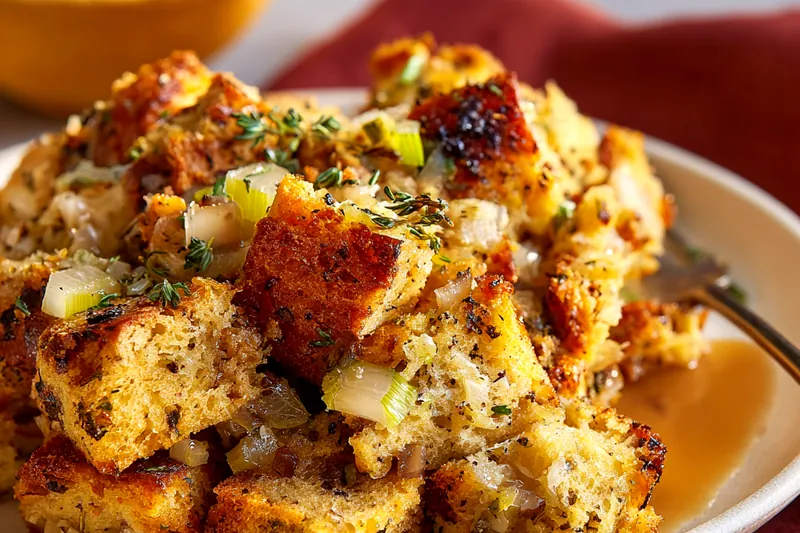
Selecting the Perfect Ingredients
The foundation of exceptional stuffing starts with choosing the right bread. Opt for a sturdy, crusty artisan bread like sourdough or French bread with a tight, even crumb structure. The crust adds texture and flavor, while the dense interior provides enough structure to absorb liquid without disintegrating. Avoid soft sandwich breads or overly airy breads - they'll turn to mush. Day-old bread is actually ideal because it's already lost some moisture, making the drying process quicker. If you only have fresh bread, don't worry; the oven-drying step will get it to the perfect texture. The bread should be cut into roughly 3/4-inch cubes - not too small (they'll get mushy) and not too large (they won't absorb enough flavor).
Fresh herbs are non-negotiable for this recipe - their bright, aromatic oils are what make the stuffing truly special and give it that authentic Thanksgiving flavor. Dried herbs simply can't provide the same depth and complexity. When selecting herbs, look for vibrant green leaves without browning or wilting. For the broth, use a high-quality low-sodium chicken or turkey stock; low-sodium allows you to control the salt level precisely. If you're making this vegetarian, a good vegetable broth works perfectly. The butter should be unsalted so you can control seasoning, and using real butter (not margarine) makes a significant difference in both flavor and how the stuffing browns.
Essential Ingredient Notes
- Bread Selection: Choose bread with personality - sourdough adds tanginess, French bread provides neutrality for the herbs to shine, and rustic Italian bread offers hearty texture. The bread should be sturdy enough that you can firmly press a cube between your fingers without it immediately crumbling. Avoid pre-cubed stuffing mix as it's often over-dried and lacks the texture variety of fresh bread.
- Fresh Herbs: The herb trinity of sage, thyme, and parsley is traditional for good reason. Sage should have soft, velvety gray-green leaves - avoid if they're browning. Thyme leaves should easily strip from the stem when you run your fingers down it. Flat-leaf (Italian) parsley has more flavor than curly parsley. If you're feeling adventurous, adding a tablespoon of fresh rosemary creates an interesting variation, but don't exceed that amount as it can be overpowering.
- Broth Quality: The broth you choose significantly impacts flavor since the bread absorbs so much of it. Homemade stock is wonderful if you have it, but a high-quality store-bought low-sodium version works excellently. Look for broth with minimal ingredients - just vegetables, meat, herbs, and water. Avoid broths with added MSG or too many preservatives. The low-sodium aspect is critical because you're adding salt separately and you'll likely be serving this with gravy, which adds more sodium.
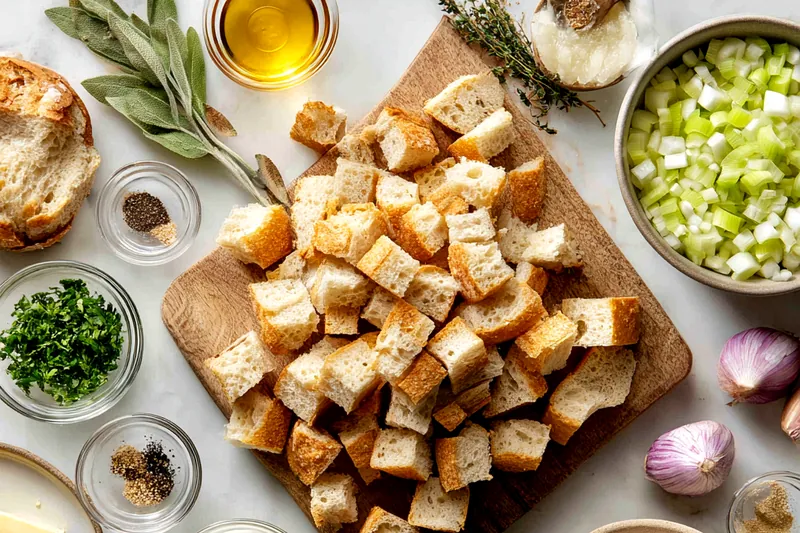
Mastering the Technique
The technique behind perfect stuffing revolves around moisture management and understanding how bread behaves when baked. First, drying the bread creates a consistent starting point - every cube has the same moisture content, which means they'll all absorb liquid evenly. This initial drying should make the bread feel crispy to the touch but not browned or toasted. When you sauté the aromatics, you're accomplishing two things: concentrating their flavors through the Maillard reaction and creating a fat-based flavor vehicle (the butter) that will coat every bread cube. The vegetables should be soft and translucent, not browned - you want sweet, mellow flavors, not caramelized ones.
The mixing process requires a gentle but thorough touch. Use your hands or a large spoon to toss everything together, ensuring the liquid reaches every cube without crushing the bread. The mixture should look shaggy and varied - some pieces more saturated than others - which creates textural interest. When transferring to the baking dish, resist the urge to pack it down tightly; a loosely arranged stuffing with some air pockets will cook more evenly and develop better texture. The two-stage baking (first covered, then uncovered) is crucial: the covered phase steams and cooks the interior evenly, while the uncovered phase creates that irresistible golden-brown crust on top. This method ensures you get both perfectly cooked center and gloriously crispy top in one dish.
The Two-Stage Baking Method
Covering the stuffing with foil for the first 25 minutes creates a steaming effect that heats the interior evenly and helps the flavors meld together. The moisture is trapped, preventing the top from drying out prematurely. When you remove the foil for the final 20-25 minutes, you're allowing moisture to escape and the surface to dry out and brown. This exposure to direct heat creates the Maillard reaction on the top layer, developing complex flavors and that coveted crispy texture. If you skip the covered stage, the outside will overcook before the center is done. If you skip the uncovered stage, you'll miss out on the textural contrast that makes stuffing special.
The Absolute Best Thanksgiving Stuffing
📋 Ingredients
Aromatics & Herbs
- 2 cups diced yellow onion (about 2 medium onions)Dice evenly for uniform cooking; sweet onions can be used for milder flavor
- 1 1/2 cups diced celery (about 4 stalks)Include some leaves for extra flavor; cut into 1/4-inch pieces
- 4 cloves garlic, mincedFresh garlic only - garlic powder won't provide the same flavor
- 2 tablespoons fresh sage, finely choppedAbout 15-20 leaves; rub leaves before chopping to release oils
- 2 tablespoons fresh thyme leavesStrip from stems by running fingers down the stem
- 1/2 cup fresh parsley, choppedFlat-leaf parsley preferred; chop just before using
Base & Liquid
- 1 pound sourdough or French bread, cut into 3/4-inch cubes (about 12 cups)Day-old bread works best; should have a crusty exterior
- 1/2 cup (1 stick) unsalted butterReal butter only - don't substitute with margarine
- 2 1/2 to 3 cups low-sodium chicken or turkey brothStart with 2.5 cups and add more if needed; should be warm
- 2 large eggs, beatenHelps bind the stuffing and adds richness
- 1 teaspoon saltAdjust based on broth saltiness; taste aromatics before adding to bread
- 1/2 teaspoon black pepperFreshly ground provides best flavor
- 1/4 teaspoon ground nutmeg (optional)Adds subtle warmth; don't exceed this amount
Instructions
Prepare and Dry the Bread
Preheat your oven to 300°F. Spread the bread cubes on two large baking sheets in a single layer, ensuring they're not overlapping. Bake for 15-20 minutes, stirring once halfway through, until the bread is dried out but not browned - it should feel crispy when you touch it. Transfer the dried bread to a large mixing bowl (at least 6-quart capacity) and increase oven temperature to 350°F for the final bake.
Sauté the Vegetables
In a large skillet (12-inch) over medium heat, melt the butter completely. Add the diced onion and celery, cooking for 8-10 minutes, stirring occasionally, until the vegetables are softened and translucent but not browned. Add the minced garlic, chopped sage, and thyme leaves, cooking for another 2 minutes while stirring constantly until fragrant and the garlic is softened. Remove from heat immediately to prevent burning.
Combine Ingredients
Pour the hot sautéed vegetable mixture over the dried bread cubes in the bowl, scraping all the butter from the pan. Add the chopped parsley, salt, pepper, and nutmeg (if using). In a separate medium bowl, whisk together the beaten eggs and 2 1/2 cups of broth until well combined. Pour this liquid mixture over the bread and vegetables, then use your hands or a large spoon to toss everything gently but thoroughly, ensuring all bread cubes are moistened. The mixture should be moist but not soupy - add the remaining 1/2 cup broth if it seems too dry.
Bake the Stuffing
Transfer the stuffing mixture to a greased 9x13-inch baking dish, spreading it evenly but not packing it down - leave it loose with some air pockets. Cover the dish tightly with aluminum foil and bake for 25 minutes. Remove the foil and continue baking for an additional 20-25 minutes until the top is deeply golden brown and crispy, and the internal temperature reaches 165°F when measured with an instant-read thermometer. Let rest for 5 minutes before serving to allow the structure to set.
Recipe Notes & Tips
Storage
Store leftover stuffing in an airtight container in the refrigerator for up to 4 days. To freeze, cool completely, then transfer to freezer-safe containers or heavy-duty freezer bags, removing as much air as possible. Freeze for up to 3 months. Thaw overnight in the refrigerator before reheating.
Serving Suggestions
Serve this stuffing hot alongside roasted turkey or chicken, with plenty of gravy for drizzling. It pairs beautifully with cranberry sauce, roasted vegetables, mashed potatoes, and green bean casserole. For a complete Thanksgiving plate, add a dinner roll and your favorite holiday sides.
Variations
Sausage Stuffing: Add 1 lb cooked, crumbled breakfast sausage. Apple-Sage: Add 2 diced Granny Smith apples. Mushroom: Add 8 oz sautéed mushrooms. Cranberry-Pecan: Fold in 1/2 cup dried cranberries and 3/4 cup toasted pecans. Cornbread: Replace half the bread with cornbread cubes for Southern-style stuffing.