Tropical Pineapple Coconut Smoothie
This Tropical Pineapple Coconut Smoothie brings instant vacation vibes to your morning routine with its perfectly balanced sweet-tart flavor and luxuriously creamy texture. The combination of fresh pineapple and coconut creates an island-inspired treat that's both indulgent and nutritious, delivering a powerful dose of vitamin C, potassium, and protein to fuel your day. Whether you're looking for a quick breakfast solution, post-workout recovery drink, or afternoon pick-me-up, this smoothie delivers tropical paradise in every sip.

Why This Smoothie Works So Well
The magic of this tropical smoothie lies in the careful balance of textures and flavors. Fresh or frozen pineapple provides natural sweetness and a bright, tangy acidity that wakes up your taste buds, while the ripe banana adds body and natural creaminess without overwhelming the tropical notes. Greek yogurt contributes protein and a subtle tang that complements the fruit beautifully, creating a smoothie that's satisfying enough to keep you full for hours rather than leaving you hungry thirty minutes later.
Coconut milk serves as the liquid base, bringing rich, velvety texture and authentic tropical flavor that water or regular milk simply cannot replicate. The full-fat version creates the most luxurious mouthfeel, though light coconut milk works if you're watching calories. Adding shredded coconut directly into the blend intensifies the coconut flavor while contributing healthy fats and fiber. This combination of ingredients creates a smoothie that tastes decadent but delivers genuine nutritional benefits, with vitamin C from pineapple, potassium from banana, probiotics from yogurt, and medium-chain triglycerides from coconut.
💡 Professional Tip
For the smoothest, most restaurant-quality texture, freeze your pineapple chunks overnight and use them straight from the freezer instead of adding ice. This prevents dilution while creating that thick, frosty consistency that makes the smoothie feel extra indulgent. If you prefer a thinner, more drinkable consistency, simply add an extra 1/4 cup of coconut milk.
Frequently Asked Questions
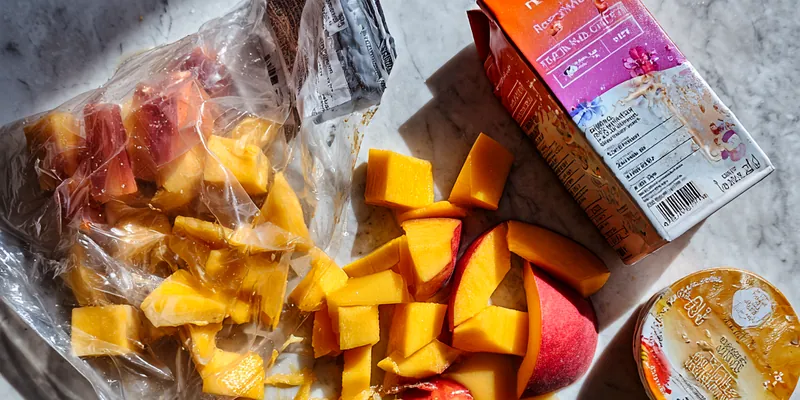
Yes, you can prep smoothie packs by portioning the pineapple, banana, and shredded coconut into freezer bags. When ready to blend, just add the frozen fruit pack to your blender with the coconut milk, yogurt, and vanilla. For the best texture, blend and drink immediately rather than storing blended smoothies, as separation occurs within a few hours. If you must store a blended smoothie, keep it refrigerated in an airtight container for up to 24 hours and shake vigorously before drinking.
Absolutely! Replace the Greek yogurt with coconut yogurt for a completely dairy-free version that maintains the creamy texture. You could also use cashew yogurt, almond yogurt, or simply add an extra 1/4 cup of coconut milk plus 1 tablespoon of chia seeds (let sit for 5 minutes before blending) to create body. For added protein in dairy-free versions, consider adding a scoop of vanilla plant-based protein powder.
Both work beautifully, but frozen pineapple creates a thicker, frostier texture similar to a milkshake and eliminates the need for as much ice. Fresh pineapple delivers slightly brighter, more intense tropical flavor and works best when you want a thinner, more drinkable smoothie. If using fresh pineapple, increase the ice to 3/4 cup for proper thickness. Canned pineapple works in a pinch but tends to be less flavorful and adds extra sugar from the syrup.
Use canned coconut milk from the Asian foods section for the creamiest results - the full-fat version creates restaurant-quality richness. Shake the can well before opening, as the cream separates from the liquid. Coconut milk beverage from the refrigerated section works but produces a thinner smoothie. Avoid coconut cream unless you want an extremely thick result. For a lighter option, use light canned coconut milk and add a splash of water if needed to reach your desired consistency.
The smoothie is ready when you see no visible chunks of fruit or ice, the color is uniformly pale yellow, and the texture appears smooth and creamy throughout. Listen for the blender sound to become consistent rather than chunky or labored. Pour a small amount into a glass and check - it should coat the glass lightly and flow smoothly. If you see specks of ice or fruit, blend for another 10-15 seconds. Over-blending for more than 60 seconds can create a watery texture as ice melts.
This smoothie pairs beautifully with whole grain toast topped with almond butter and sliced banana for a complete breakfast. For brunch, serve alongside coconut chia pudding parfaits or tropical fruit salad with lime and mint. It's also excellent with protein-rich sides like a veggie and egg scramble, avocado toast, or Greek yogurt topped with granola. For a lighter pairing, enjoy with a small handful of macadamia nuts or a homemade energy ball made with dates and coconut.
Yes, this smoothie is an excellent base for protein powder - vanilla or unflavored works best to avoid competing with the tropical flavors. Add 1 scoop after the initial blend, then pulse for 10 seconds to incorporate. You can also add 1 tablespoon of chia seeds, flax seeds, or hemp hearts for extra omega-3s and fiber. Collagen powder dissolves beautifully in this recipe. For a nutrient boost, add a handful of spinach (you won't taste it) or 1/4 teaspoon of spirulina for a blue-green tropical variation.
Store leftover smoothie in an airtight glass jar or container in the refrigerator for up to 24 hours, filling it to the top to minimize air exposure. The mixture will separate, so shake vigorously for 15-20 seconds before drinking. For longer storage, pour the smoothie into ice cube trays and freeze. When ready to enjoy, blend 6-8 smoothie cubes with 1/4 cup coconut milk to reconstitute. The texture won't be quite as perfect as fresh, but it's a great option for reducing waste.
Recipe Troubleshooting Guide
Smoothie Is Too Thick
Problem: The smoothie won't pour and has the consistency of ice cream or sorbet.
Solution: Add liquid in small increments - start with 2 tablespoons of coconut milk, blend for 10 seconds, and check consistency. Repeat until you reach your desired thickness. You can also add 1-2 tablespoons of pineapple juice or water. If using frozen fruit, let it thaw for 2-3 minutes before blending, or reduce the frozen fruit amount next time.
Smoothie Is Too Thin or Watery
Problem: The smoothie is more like juice than a thick, creamy drink.
Solution: Add more frozen banana (half of another banana works well) or 2-3 tablespoons of Greek yogurt to thicken. You can also add 3-4 more ice cubes and blend again. For future batches, use less liquid or ensure you're using frozen pineapple rather than fresh. Frozen banana is your secret weapon for adding body without changing the flavor.
Chunks Won't Blend Smoothly
Problem: You can still see or taste pieces of fruit or ice despite extended blending.
Prevention: Stop the blender and use a spatula to push ingredients down toward the blades, ensuring nothing is stuck on the sides. Add 2 tablespoons of liquid to help create a vortex. Blend liquids and soft ingredients first, then add frozen items gradually. If your blender struggles, cut fruit into smaller chunks before freezing. A high-powered blender like a Vitamix makes a significant difference in achieving silky smoothness.
Not Sweet Enough
Problem: The smoothie tastes tart or bland rather than naturally sweet.
Recovery: First, ensure you're using ripe banana with brown spots - this adds significant natural sweetness. Add 1 tablespoon of honey, maple syrup, or agave nectar and blend. You can also add 2-3 pitted dates for natural sweetness with added fiber. If using canned pineapple instead of fresh, choose the juice-packed variety. Vanilla Greek yogurt instead of plain adds subtle sweetness without extra sugar.
Coconut Flavor Too Weak
Problem: The smoothie doesn't taste tropical enough or lacks coconut presence.
Prevention: Increase the shredded coconut to 3-4 tablespoons and blend thoroughly. Use full-fat canned coconut milk instead of light or beverage varieties. Add 1/4 teaspoon of coconut extract for intense flavor without changing texture. Toast your coconut flakes before adding for deeper, more complex coconut notes. You can also add 1 tablespoon of coconut butter for ultra-rich coconut flavor.
Flavor Balance Issues
Too Sweet: If your smoothie turned out too sweet, add 1/4 cup of plain Greek yogurt and a squeeze of fresh lime juice to balance the sweetness with tang. You can also add a small handful of baby spinach or kale, which adds nutrients without noticeably affecting the flavor.
Too Salty: If you accidentally added salted coconut flakes or your yogurt was unexpectedly salty, dilute with 1/4 cup of fresh pineapple and 2 tablespoons of coconut milk. Add 1 teaspoon of honey to mask any saltiness. For future batches, always use unsweetened or lightly sweetened coconut.
Bland: If the smoothie tastes flat or boring, add brightness with 1/2 teaspoon of fresh lime juice and a pinch of lime zest. Increase vanilla extract to 1/2 teaspoon. Add 1 tablespoon of honey and 2 more tablespoons of shredded coconut. Fresh pineapple has more vibrant flavor than frozen, so consider that switch for your next batch.
Choosing the Best Ingredients
The quality of your ingredients directly impacts the final flavor of this smoothie. When selecting fresh pineapple, look for fruit that's golden-yellow in color with no green patches, has a sweet aroma at the base, and yields slightly to gentle pressure. The leaves should pull out easily from a ripe pineapple. If you can only find underripe pineapple, letting it sit at room temperature for 2-3 days will improve sweetness. For convenience and consistent results, high-quality frozen pineapple chunks work beautifully and are often picked at peak ripeness.
Your banana should have brown spots on the peel, indicating the starches have converted to natural sugars, which creates the sweet flavor and creamy texture essential to this recipe. Green or barely yellow bananas will make your smoothie taste chalky and require additional sweetener. For coconut milk, always choose the canned variety from the Asian foods section rather than coconut milk beverage - the canned version has much higher coconut content and creates authentic flavor. Greek yogurt adds protein and probiotics; choose whole milk versions for the creamiest result, or 2% if you prefer lighter options.
Essential Ingredient Notes
- Pineapple Selection: Fresh pineapple should smell sweet and tropical at the base. Avoid any with soft spots, fermented smell, or dried-out leaves. For frozen pineapple, choose brands with no added sugar and individually frozen pieces rather than a solid block. Store fresh cut pineapple in an airtight container for up to 5 days refrigerated, or freeze chunks on a baking sheet before transferring to freezer bags for up to 6 months.
- Coconut Milk Types: Full-fat canned coconut milk creates the richest texture and most authentic flavor. Shake the can vigorously before opening to recombine separated cream and liquid. Don't confuse this with coconut cream (too thick) or coconut milk beverage (too thin and watery). Once opened, transfer unused coconut milk to a glass container and refrigerate for up to 4 days, or freeze in ice cube trays for future smoothies.
- Banana Ripeness: Overripe bananas with brown spots are actually perfect for smoothies - they're sweeter and blend more smoothly than firm yellow bananas. Peel very ripe bananas, break into chunks, and freeze in bags for ultimate convenience. Frozen banana adds thickness without diluting flavor like ice does. If you only have underripe bananas, add an extra tablespoon of honey to compensate for their starchy, less sweet flavor.
Blending Technique for Perfect Texture
The order in which you add ingredients to your blender significantly affects the final texture. Start with liquids (coconut milk) on the bottom, as this helps create a vortex that pulls ingredients down toward the blades. Add soft ingredients like banana and yogurt next, then the frozen or fresh pineapple, and finally ice cubes on top. This layering prevents air pockets and ensures even blending. Begin on low speed for 10-15 seconds to break down large pieces, then increase to high speed for smooth, creamy results.
Avoid the temptation to over-blend, which can cause ice to melt and create a watery texture or generate too much friction, warming the smoothie. Most smoothies reach ideal consistency in 45-60 seconds of total blending. If ingredients aren't moving toward the blades, stop the blender and use a spatula to redistribute, or add 2 tablespoons more liquid. For the thickest, most shake-like consistency, serve immediately - smoothies thin as they sit. When toasting coconut flakes for garnish, watch them carefully in a dry skillet over medium heat for 2-3 minutes, stirring constantly, as they burn quickly once they start browning.
Creating Perfect Smoothie Consistency
The secret to professional-quality smoothie texture is using mostly frozen ingredients instead of adding lots of ice, which dilutes flavor. Freeze ripe banana chunks and pineapple overnight for best results. The ratio of liquid to frozen fruit determines thickness - start with less liquid than you think you need, as you can always thin it out but can't easily thicken a watery smoothie without compromising flavor. Blend in short bursts of 10-15 seconds, checking between bursts, rather than one long continuous blend. This prevents over-processing while giving you control over the final texture.
Tropical Pineapple Coconut Smoothie
📋 Ingredients
Fruit & Dairy Base
- 1/2 cup coconut milk (full-fat canned)Shake can before opening; provides creamy tropical base
- 2 tablespoons shredded coconutSweetened or unsweetened based on preference
- 1 tablespoon honey or agave nectar (optional)Adjust sweetness to taste after blending
- 1/4 teaspoon vanilla extractEnhances tropical flavors and adds depth
Coconut Components
- 2 cups fresh or frozen pineapple chunksIf frozen, no need to thaw; fresh should be ripe and golden
- 1 ripe banana, slicedLook for brown spots for maximum sweetness and creaminess
- 1/2 cup Greek yogurt (plain or vanilla)Use whole milk for richest texture; substitute coconut yogurt for dairy-free
- 1/2 cup ice cubesReduce to 1/4 cup if using all frozen fruit
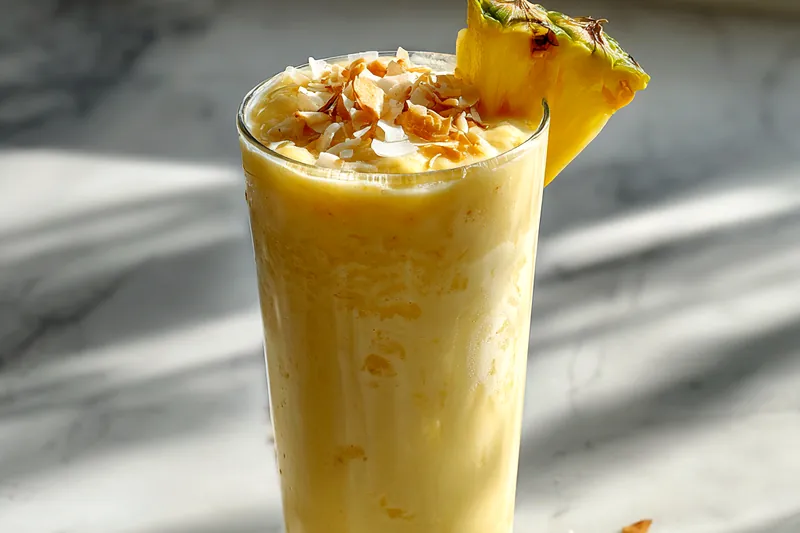
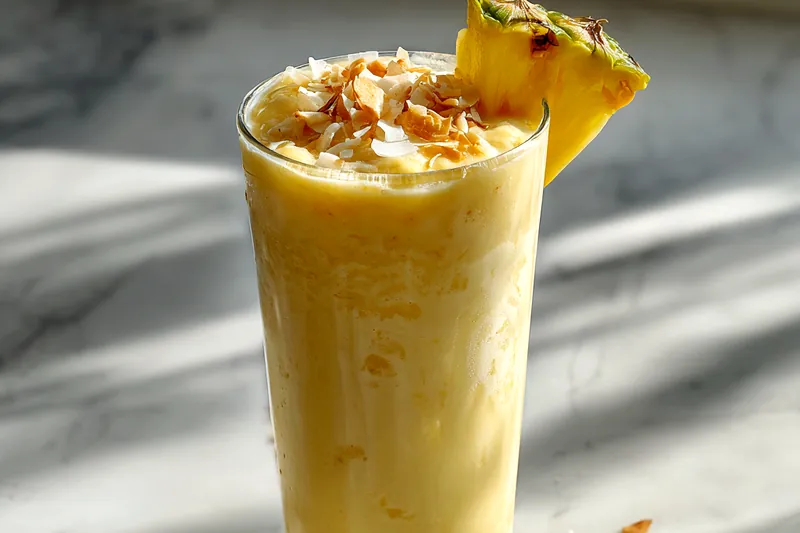
- Fresh pineapple wedge for garnishCut a small notch to secure on glass rim
- Toasted coconut flakes for toppingToast in dry pan for 2-3 minutes for enhanced flavor
Instructions
Prepare Ingredients
If using fresh pineapple, cut into chunks. Peel and slice the banana. Measure out all liquid ingredients and have them ready near your blender for efficient assembly.
Blend Base Ingredients
Add the pineapple chunks, banana slices, coconut milk, and Greek yogurt to your blender. Pour in the vanilla extract. Blend on medium speed for 15-20 seconds until ingredients begin to combine and break down.
Add Ice and Coconut
Add the ice cubes and shredded coconut to the blender. Blend on high speed for 30-45 seconds until the mixture is completely smooth and creamy with no visible chunks of fruit or ice remaining.
Adjust Consistency and Sweetness
Check the smoothie consistency - if too thick, add 2-3 tablespoons of coconut milk or water and blend briefly. Taste and add honey if you prefer additional sweetness, blending for 5-10 more seconds to fully incorporate.
Serve and Garnish
Pour the smoothie into two tall glasses. Top with toasted coconut flakes and garnish with a fresh pineapple wedge secured on the rim of each glass. Serve immediately for optimal texture and flavor.
Recipe Notes & Tips
Storage
Store in an airtight container in the refrigerator for up to 24 hours, though texture is best when consumed immediately. Shake vigorously before drinking as separation is natural. For longer storage, pour into ice cube trays and freeze for up to 3 months; blend 6-8 cubes with 1/4 cup coconut milk to reconstitute.
Serving Suggestions
Serve as a complete breakfast with whole grain toast and almond butter, or pair with a protein-rich egg scramble. Makes an excellent post-workout recovery drink or afternoon snack. For brunch, serve alongside tropical fruit salad or coconut chia pudding parfaits. Kids love this as a healthy dessert alternative.
Variations
Make it green: Add 1 cup baby spinach for nutrients without affecting tropical flavor. Protein boost: Add 1 scoop vanilla protein powder or 2 tablespoons hemp hearts. Mango twist: Replace 1 cup pineapple with frozen mango. Extra tropical: Add 1/4 cup passion fruit pulp. Creamy upgrade: Use frozen banana instead of fresh and reduce ice by half.